Blog

  • Immigrant struggle for drivers licenses heats up in Minnesota

    Minneapolis, MN – With the new legislative session underway, the drivers licenses for all campaign is kicking back into high gear in Minnesota. The immigrant rights movement is mobilizing to press the state legislature and Governor Dayton to pass a bill that would grant basic equality for immigrants.

    Currently undocumented immigrants cannot get drivers licenses in Minnesota. Due to extreme weather and inadequate public transportation, the thousands of immigrants that live in Minnesota are forced to drive for everyday tasks, like getting to work and taking children to school. Many of the immigrants that are deported and separated from their families first get ensnared in the criminal justice system when they are stopped for driving without a license. Once in the criminal justice system, Immigration and Customs Enforcement (ICE) intervenes and starts deportation proceedings against many people who have done nothing more than drive to work.

    According to Eder Alarcon of the No More Deportations campaign, “I think that as members of the immigrant community we need to struggle for drivers licenses to have access to one of the most important and necessary means of transportation in our state. If Minnesota grants drivers licenses to immigrants it would reduce one of the main causes of immigrants being detained and deported. Drivers licenses are one of the main needs of immigrants to be able to get to jobs that there’s no other way to get to without driving.”

    Several other states allow immigrants to get drivers licenses, and immigrants’ rights activists have won recent victories in places like Illinois and Washington D.C. which now allow immigrants to get drivers licenses.

    Immigrant rights activists in Minnesota have mobilized for several years to try to get the state legislature and the governor to allow immigrants to get a Minnesota drivers licenses. When the Democrats won control of both houses of the state legislature and the governor’s office in 2012, hopes were high that drivers’ licenses for all could finally be passed after several years without success due to Republican control of the Senate, and prior to 2010, a Republican governor. Yet even with Democratic control of both houses of the state legislature and with a Democratic governor, it has still been an uphill battle to get the drivers license bill passed.

    Last year a vigorous campaign succeeded in getting the Minnesota Senate to pass the drivers licenses bill, SF271. Hundreds of Latino immigrants and progressive supporters packed one committee hearing after another until the bill passed the Senate. But as last year’s legislative session wound down, the House version of the bill, HF348, stalled and Governor Dayton signaled he was reluctant to support it. At the end of the session several people staged a hunger strike at the Capitol over the issue, but in the end the House and the governor wouldn’t budge, killing the bill for the year. Since it passed the Senate last session, this year the bill just needs to pass the House and be signed by Governor Dayton.

    The driver’s license campaign in Minnesota is led by the community organization Mesa Latina, with support from the whole immigrant rights movement. On March 14, Mesa Latina led a meeting that rallied more than 200 people at the Waite House Community Center to kick off the campaign to win drivers licenses this year. At that meeting a march at the Capitol for drivers licenses for all was announced for Wednesday, March 26 at 3:00 p.m., with more mobilizations to come as the legislative session advances. Mesa Latina is also encouraging people to sign the online petition to support the Drivers License bill in the House, HF348.

  • “Stalingrad” confronts the disturbing realities of fascism and war

    Last year, I might have thought of Stalingrad as an interesting history lesson. But when I sat down in the theater to watch the new Russian war epic last weekend, all I could think about was the crisis in Ukraine.

    In less than four months time, the world watched a large, right-wing movement in Ukraine force a democratically elected government from power and replace it with a coalition ranging from far-right oligarchs to out-and-out Nazis. Russia responded to the new fascist-led government by condemning the undemocratic takeover and stationing troops in Crimea, a small region in the southeast of Ukraine comprised of a majority ethnic Russians.

    The move by Putin drew condemnation from all the usual players in the Western world, including U.S. President Barack Obama and German Chancellor Angela Merkel. While Russia defends its defensive posture out of concern at the fascist takeover, pundits in the West ridicule them and downplay the very real threat of a fascist Ukraine, the largest country on Russia’s western border. The New York Times, for instance, ran an op-ed titled “Putin’s Phantom Pogroms,” that argued – against all evidence – that Russia’s concern was a cynical ploy to dominate Ukraine. Funny, of course, for a newspaper that has a history of defending the U.S.’s many wars of aggression.

    But the threat of fascism in Ukraine matters a lot to the Russian people, and movie-goers in the U.S. would do well to see Stalingrad to better understand why.

    Stalingrad focuses on a small band of Soviet soldiers trying to defend a key neighborhood from the Nazi invaders. The neighborhood is situated in front of a major Red Army supply route, making the stakes incredibly high. Made up of a few sailors and the survivors of a war-weary combat unit, the group makes a courageous stand against the German occupation at great cost to themselves.

    You see the devastation wreaked by the Nazis on the Soviet Union on full display in the film. The neighborhood where the bulk of the film takes place is full of wreckage and dilapidated buildings. Food is scarce, and fresh water is even harder to find. Having executed most of the men left in the city, the Nazis regularly terrorize women and children in the most barbaric ways, giving the audience a glimpse of the horror of Nazi occupation. They rape Soviet women, withhold food and basic goods from the population, and forcibly relocate entire neighborhoods of people.

    In one particularly disturbing scene, a sadistic German lieutenant orders all of the women and children in the neighborhood to line up at gun point. He randomly accuses a darker skinned woman and her child of being Jewish, and the Nazi soldiers force them into a wooden structure and burn them alive. Other films on Nazi occupation explore this element of fascist violence, like the 1985 Soviet film Come and See, but Stalingrad shows how these acts of barbarism outraged ordinary working people enough to give their lives in order to drive the Germans back to Berlin. Anyone following the events in Ukraine will have a better understanding of why the rise of fascism in the neighboring country is so terrifying to the Russian people.

    One point that stands out in Stalingrad is the class composition of the Red Army and the class consciousness of the ordinary soldiers fighting German occupation. One soldier reminds another during a dispute that they are fighting in a “worker and peasant army,” showing how ordinary Soviet soldiers conceived of the war in class terms. Another soldier, who remains silent for most of the film, is revealed as a factory worker with an incredible talent for singing. His factory committee, recognizing his talent, sent him to Moscow to sing in operas and arias. Although the film shows us that he is a well-known celebrity, we find out he enlisted in the Red Army the day after the German invasion in 1941.

    Contrast that with just about any U.S. war film. Movies like Platoon show working class people in the U.S. forcibly drafted into the military to fight wars on behalf of the rich. Some justify it to themselves in nationalistic terms, but most soldiers were forced to risk their lives because of their class background.

    In Stalingrad, the workers fighting Nazi occupation have pride in their class, not just their country, which directly contrasts with the Nazi soldiers. At one point, a German officer tries to psyche his soldiers up to storm the Red Army’s neighborhood base by telling them that they will conquer India after defeating the USSR. Addressing a battalion made up of many child soldiers, some no older than 13, he talks about Indian women in the most racist terms and explains the Nazi imperialist project as their reason for fighting. Stalingrad highlights that while the Nazis fought for colonial and imperialist expansion, the Soviet Red Army fought for freedom from the jackboot of fascism.

    Technically speaking, the cinematography of Stalingrad is masterful, which was released in IMAX 3-D. An early scene features a large battalion of Soviet soldiers storming a Nazi fuel bunker from the water. The amphibious landing blows up in their face – literally – as the Nazi commanding officers destroy the bunker in order to prevent the Red Army from capturing the fuel. The enormous explosion is only outdone by the sight of Soviet soldiers, burning alive from the oil fire, bravely charging the German barricade and tackling Nazi soldiers to the ground to also burn. Released the same weekend as 300: Rise of an Empire, the sequel to the racist fantasy war epic of the same name, Stalingrad provides all of the stunning visuals and thrills while remaining rooted in reality.

    All of that said, you can tell Stalingrad was made in the Russian Federation, and not the Soviet Union, more than 20 years after the restoration of capitalism. The film mentions the Soviet Union and bits of dialogue pay homage to socialism, but the tone of the film is more nationalistic than any World War II films produced in the USSR. After the film, I couldn’t help but contrast Stalingrad with Come and See, which focused on the Belarusian resistance to brutal Nazi occupation. If Come and See is the Apocalypse Now of Soviet war films, Stalingrad was much more like Saving Private Ryan. The political nature of the events on-screen is purposely toned down to emphasize the visuals and the plot, which might make the film disappointing to some Soviet history buffs.

    The people of the former Soviet Union take the threat of fascism very seriously, and Stalingrad clearly articulates why they should. Most histories of World War II in the West would have us believe that the U.S. single-handedly defeated Hitler. Ultimately, this is why Stalingrad is such an important film for people in the U.S. to see. Of the 60 million people who died in World War II, the Soviet Union bore the brunt of the war against fascism, suffering more than 7 million military deaths and millions of other civilian deaths. Even the highest death tolls for the U.S. place the military death toll no higher than 420,000.

    Stalingrad forces us to confront the reality of fascism and war from the perspective of Russians, which is more important than ever before with recent developments in Ukraine. The Soviet Union is gone, but the people of Russia all have parents, grandparents, or great-grandparents who paid the ultimate sacrifice defeating fascism during World War II. For people in the U.S., World War II films like Stalingrad provide important ground for discussing the roles of other nationalities in defeating the Nazis, which is often downplayed in Hollywood. Stalingrad provides such discussions, and that alone makes it worth the ticket price.

  • Crimea : Two people – a self-defense member and a Ukrainian soldier – were killed and two others wounded after snipers opened fire from a partially inhabited building near a military research center in Simferopol

    Democracy and Class Struggle is well aware how incidents like this can explode in widespread conflict. 

    The remnants of Ukrainian Army in Crimea has now been ordered to use live fire and Nazis and Fascist provocateurs in pay of NATO are trying to inflame conflict in Crimea and Eastern and Southern Ukraine.

    The BBC is giving an extremely one sided account of these incidents – expect more

  • Pro-West gangs attack Ukraine anti-fascists by Greg Butterfield of Workers World

    Emboldened by the U.S.-orchestrated coup d’état in the capital city of Kiev and Pentagon military posturing against Russia, fascist violence in Ukraine has escalated from vandalism to arson, beatings to shootings, and now — the brazen murder of anti-fascist activists. To answer these attacks, progressive and communist forces are continuing mass actions and organizing self-defense.

    The

  • Young UPS workers are fighting back

    Tampa, FL – Young workers at UPS are fighting back against low pay, part-time work and concessionary contracts that attack employee health care. The “Vote No” movement at UPS, a rank-and-file revolt of Teamsters against the cutbacks pushed by UPS management and some sell-out union officials within the Teamster union, sparked young workers across the country to hit the gates of their buildings to leaflet and organize their coworkers.

    “When we saw the proposed agreement, it did nothing to address the issues faced by thousands of Teamsters across the country. As a part-timer, I felt like I was being sold out. That’s when my co-workers and I found the Vote No movement and began leafleting our co-workers and speaking out at meetings against the contract.” said Dustin Ponder, 25, a part-time UPS worker in Tampa.

    The agreement would hit young part-timers especially hard, introducing health care cuts, lower raises, no hope for full-time employment anytime soon, and moving the full-time pay progression from three years to four years for future drivers. “The IBT let us down in negotiations. UPS made billions off our labor while part-timers are being worn down and struggling against poverty. Paying more for insurance while cutting our raises is inexcusable. As a husband who is trying to take care of a sick wife, these concessions hurt us the most,” states Cory Oliver, a 24-year-old part-time activist in Milwaukee, Wisconsin who has been with the company for six years.

    The vast majority of the part-time work force at UPS are young workers between the ages of 18 and 30. Most make under $10,000 a year, and perform back-breaking labor, often without health insurance for their first year. Many of these workers, who are trying to support families, or pay their rent, are forced to work two or three jobs just to make ends meet.

    From the militant 1997 UPS strike to winning a national master freight agreement for truckers nationwide in the 1960s, the Teamsters union has long been at the forefront of worker struggles in the U.S. This new generation of fighters is hoping to continue making history of their own. They are trying to build a nationwide network of part-timers, working with Teamsters for a Democratic Union. They’ve created a Facebook group called “Part Time Power at UPS.” They are planning to start monthly nationwide contract enforcement campaign and create a set of national UPS contract demands for part-timers before of the next IBT [International Brotherhood of Teamsters] international elections and the next contract negotiations.

    “The International only dealt with one issue concerning part-timers: the starting wage. The IBT, of course, only dealt with it in minimal fashion. Teamsters who work part time at UPS make up roughly more than half of the unionized workforce, and UPS Teamsters make up almost a quarter of Teamsters. If organized, part-timers could potentially pick the next IBT President and make both the IBT and UPS deal with part-time issues,” states Charles Jordan, a shop steward active in the part-time movement in New York City’s Local 804.

    2014 promises to be a year of growth in the young part-time movement. The group is encouraging fellow part-timers to get active in their locals by building campaigns to run young militants for shop steward and part-timers for local union offices with the aim to turn their locals into fighting unions that work for the interests of the workers themselves.

  • Should Ukraine and West Accept de facto Crimea Joining Russia ?

    Prof. Tarik Cyril Amar and Prof. Nicolai Petro say while the legalities of the Crimea referendum are dubious, the only way out of this crisis to accept its results

    This is a very good discussion with two highly informed people and well worth listening to and thinking about –  this is not the level of banal discussion on the BBC or even RT but one that is honest and frank about the Ukrainian

  • गांधीवाद को भ्रम की टोपी पहना रहे आनंदमार्गी प्रोफेसर!

    अभिषेक रंजन सिंह 
    जनता को सब्ज़बाग़ दिखाने में माहिर आम आदमी पार्टी अब गांधीवादियों को भी बरग़लाने लगी है. हाथ में तिरंगा, सिर पर गांधी टोपी और मुंह से राजनीतिक शुचिता की बात करने वाले पार्टी नेताओं के दर्शन, आचरण और सिद्धांत में गांधीवाद की कोई झलक नहीं मिलती. लोकसभा चुनावों में चंद सीटों का इंतज़ाम कैसे हो, इसके लिए आम आदमी पार्टी हर किस्म का प्रयोग करना चाहती है. पार्टी की ओर से अब तक घोषित ज़्यादातर लोकसभा उम्मीदवारों की पृष्ठभूमि देखें, तो वे विदेशी अनुदान से संचालित होने वाले एनजीओ से जुड़े रहे हैं. ऐसे में गांधीवादी मूल्यों पर अद्वितीय राजनीति करने का दंभ भरने वाले केजरीवाल को यह बताना चाहिए कि पूंजीवाद के मार्ग पर चलते हुए गांधीवाद के लक्ष्य को कैसे पूरा किया जा सकता है।   
    पिछले महीने दिल्ली स्थित गांधी शांति प्रतिष्ठान में गांधीजनों की दो दिवसीय बैठक आयोजित की गई थी. विशुद्ध गांधीवादियों की इस बैठक में आगामी लोकसभा चुनावों में उनकी क्या भूमिका होनी चाहिए, इस पर विस्तृत चर्चा हुई. उक्त बैठक में वयोवृद्ध गांधीवादी नारायण देसाई, गांधी स्मारक निधि के सचिव रामचंद्र राही, एस एन सुब्बाराव, सर्व सेवा संघ की पूर्व अध्यक्ष राधा भट्ट और अमरनाथ भाई के अलावा गांधीवादी लेखक-पत्रकार कुमार प्रशांत और गिरिराज किशोर भी शामिल थे.

    अगले दिन कुछ अख़बारों में यह ख़बर प्रकाशित हुई कि गांधीवादी लोकसभा चुनाव में अरविंद केजरीवाल की आम आदमी पार्टी को सशर्त समर्थन देंगे. जब इस बाबत गांधीवादी बुद्धिजीवियों से पूछा गया, तो उन्होंने इस तरह की बातों को नकार दिया. 

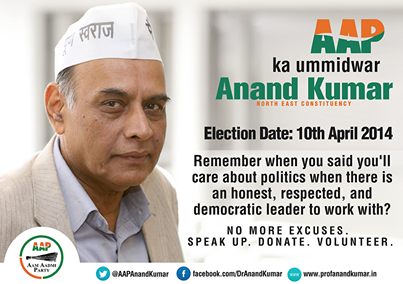
    दरअसल, गांधी शांति प्रतिष्ठान में हुई उक्त बैठक में जवाहर लाल नेहरू विश्‍वविद्यालय (जेएनयू) के प्रोफेसर प्रो. आनंद कुमार भी शामिल थे. यह पूरी तरह ग़ैर-राजनीतिक था, लेकिन प्रो. आनंद कुमार की मौजूदगी और उनके संबोधन से आम आदमी पार्टी को समर्थन देने संबंधी भ्रम पैदा हुआ. किसी ज़माने में समाजवादी छात्र राजनीति करने वाले और अब आम आदमी पार्टी के थिंक टैंक कहे जाने वाले प्रो. आनंद कुमार को पार्टी ने उत्तरी-पश्‍चिमी दिल्ली से लोकसभा का टिकट दिया है. 

    आम आदमी पार्टी को हर वर्ग के लोगों और बुद्धिजीवियों का समर्थन कैसे मिले, इसके लिए वह निरंतर प्रयास करते रहते हैं. ग़ौरतलब है कि वयोवृद्ध गांधीवादी नारायण देसाई के ज्येष्ठ पुत्र नचिकेता भी आम आदमी पार्टी के सक्रिय सदस्य हैं. नारायण देसाई गुजरात में रहते हैं. नचिकेता के ज़रिए ही इस बैठक से पहले प्रो. आनंद कुमार नारायण देसाई से मिलने अहमदाबाद आए और आम आदमी पार्टी के लिए गांधीवादियों का समर्थन मांगा. सूत्रों के मुताबिक़, नारायण देसाई ने साफ़ शब्दों में कह दिया कि वह सर्व सेवा संघ से जुड़े हैं, इसलिए किसी पार्टी को समर्थन करना उनके सिद्धांत के विरूद्ध है.
    प्रो. आनंद कुमार को क़रीब से जानने वाले बताते हैं कि वह छात्र राजनीति के समय से ही संदिग्ध रहे हैं. उन दिनों समाजवादी युवजन सभा में भी दो गुट थे. एक मधु लिमये का तो दूसरा राजनारायण का. प्रो. आनंद कुमार राजनारायण के गुट में शामिल थे. वर्ष 1972 के बीएचयू छात्रसंघ चुनाव में संतोष कुमार कपूरिया ने बतौर निर्दलीय छात्रसंघ के अध्यक्ष पद पर जीत हासिल की. हालांकि, कुछ ही समय बाद संतोष कुमार कपूरिया की हत्या कर दी गई. लिहाज़ा बीएचयू में छात्रसंघ अध्यक्ष का पद रिक्त हो गया. 

    उस समय प्रो. आनंद कुमार ने भी छात्रसंघ का चुनाव लड़ा था, लेकिन उन्हें हार का सामना करना पड़ा था. छात्रनेता कपूरिया की हत्या के बाद प्रो. कुमार को उनके स्थान पर अध्यक्ष बनाया गया. छात्रसंघ चुनाव के इतिहास में संभवतः यह पहला मौक़ा था, जब किसी पराजित उम्मीदवार को अध्यक्ष बना दिया गया. हालांकि, बाद में बीएचयू छात्रसंघ चुनाव के नियमावली में संशोधन किया गया. नए प्रावधानों के मुताबिक़, छात्रसंघ के उपाध्यक्ष का पद सृजित किया गया, ताकि अध्यक्ष की मृत्यु या उनके इस्ती़फे के बाद छात्रों द्वारा चुना गया व्यक्ति ही अध्यक्ष बन सके न कि कोई पराजित उम्मीदवार. 


    प्रो. आनंद कुमार को लेकर बातें यहीं ख़त्म नहीं होती. अमरचंद्र जोशी उन दिनों काशी हिंदू विश्‍वविद्यालय के कुलपति थे. उस समय किसी मुद्दे को लेकर बीएचयू के छात्रों ने काफ़ी बड़ा आंदोलन किया. छात्रों के इस रवैये से नाराज़ विश्‍वविद्यालय प्रशासन ने आनंद कुमार समेत कई छात्रों को निष्काषित कर दिया था. ऐसे समय में छात्रों के साथ खड़ा होने के बजाय प्रो. आनंद कुमार ने गोपनीय रूप से कुलपति अमरचंद्र जोशी से मुलाक़ात की और उनसे माफ़ी मांगी. उसके बाद उनका निष्काषण वापस लिया गया. उनके इस व्यवहार से बीएचयू के छात्रों में बेहद निराशा और नाराज़गी हुई. उसके बाद बीएचयू कैंपस में आनंद कुमार माफ़ी कुमार के नाम से पुकारे जाने लगे. 

    जेपी आंदोलन के समय प्रो. आनंद कुमार नई दिल्ली स्थित जवाहर लाल नेहरू विश्‍वविद्यालय (जेएनयू) आ गए. यहां वह समाजवादी युवजन सभा के बजाय फ्री थिंकर्स नामक संगठन के बैनर तले छात्र राजनीति करने लगे. उन्होंने जेएनयू में छात्रसंघ अध्यक्ष का चुनाव भी फ्री थिंकर्स के टिकट पर लड़ा और जीत हासिल की. बाद में स्टूडेंट्स फॉर डेमोक्रेटिक सोशलिज़्म बना, जिसमें दिग्विजय सिंह, चेंगल रेड्डी, जसवीर सिंह और सुनील जैसे छात्र नेता उन दिनों शामिल थे.

    जेपी आंदोलन के समय ही राष्ट्रीय स्तर की छात्र युवा संघर्ष समिति बनी थी, जिसमें अरुण जेटली संयोजक और आनंद कुमार सह-संयोजक थे. वर्ष 1975 में देश में इमरजेंसी की घोषणा कर दी गई. इसी दौरान प्रो. आनंद कुमार आंदोलन बीच में ही छोड़कर उच्च शिक्षा हासिल करने शिकागो पहुंच गए. उनके अमेरिका जाने से छात्रों ने एक बार फिर ठगा हुआ महसूस किया. यही वजह थी कि उन दिनों जेएनयू के वामपंथी छात्र इसे लेकर समाजवादी छात्र नेताओं पर खूब व्यंग्य करते थे. 

    बहरहाल, कुछ वर्षों बाद प्रो. आनंद कुमार शिकागो से पढ़कर स्वदेश वापस लौटे और बीएचयू में अध्यापक बन गए. हालांकि, इस बीच उनकी सियासी महत्वकांक्षा पहले से कहीं ज़्यादा बढ़ चुकी थी. यही वजह थी कि वह स्वार्थवश कभी मुलायम सिंह यादव से नज़दीकियां बढ़ाने की कोशिश करते रहे तो कभी चंद्रशेखर से. प्रो. आनंद कुमार की इसी अवसरवादी स्वभाव से मोहन सिंह और कपिलदेव सिंह जैसे खांटी समाजवादी नेता उन्हें संदेह की दृष्टि से देखा करते थे.
     (चौथी दुनिया से साभार) 
  • Minneapolis protests growing danger of a new cold war and U.S. intervention

    Minneapolis, MN – More than 50 people joined a coalition of Twin Cities peace and anti-war groups, March 15, to speak out against the growing danger of a new cold war with Russia. The protest was organized under the call, “No New Cold War with Russia – U.S. Hands Off Ukraine, Venezuela, Syria & Everywhere – No New U.S. Wars and Interventions – People Need Funds for Housing, Jobs and Education, not the Pentagon!”

    A statement issued by organizers says in part, “The Ukraine crisis has the U.S. and NATO issuing threats of sanctions against Russia, we see a build-up of military forces, warships with guided missiles to the Black Sea, F-15 fighter jets being dispatched to Poland. These are dangerous times. For people in the U.S., we must always remember, the U.S. government does not intervene for justice or democracy, but to uphold the interests of the 1%. A new set of wars, or a new cold war with Russia, will not benefit anyone but the corporations and the defense contractors.”

    Holding signs and banners at the very busy intersection of Cedar Avenue and 3rd South Street on the West Bank in Minneapolis, participants chanted and listened to speakers.

    Alan Dale, of the Minnesota Peace Action Coalition, opened the rally and then introduced Marie Braun, of the Twin Cities Peace Campaign and Women Against Military Madness. She said, “Americans came out in force against missile attacks in Syria. Hopefully, Americans will understand that a new cold war is not in their interest. A new cold war will primarily benefit corporations and defense contractors, and that is not the 99%.”

    Meredith Aby, of the MN Anti-War Committee, said, “I find the Obama administration’s recent expressions of concern for the right to dissent in other countries to be particularly outrageous while anti-war activists like myself are under federal investigation in this country for organizing peace protests and solidarity with Colombia and Palestine. Democracy, free speech, human rights – these are excuses given by the U.S. government to persuade the public to support their wars.”

    Aby also said, “It is important that we are here today to say no to the Obama administration’s efforts to delegitimize Venezuela’s democratically elected government. We must oppose the $5 million in the 2014 U.S. federal budget and the hundreds of millions of dollars the U.S. has spent over the past fifteen years funding opposition activities inside Venezuela.”

    The crowd was roused as Braun and Aby each challenged the hypocrisy of the recent statement by Secretary of State John Kerry, “You just don’t in the 21st century behave in 19th century fashion by invading another country on completely trumped up pretext.” They recalled U.S. invasions of Iraq and Afghanistan, the U.S. role in Libya, and its threats to bomb Syria and attack Iran.

    Other speakers included Dave Logsdon, Vice President of Veterans for Peace Chapter 27, and Cherrene Horazuk, president of AFSCME Local 3800. Horazuk recently returned from observing elections in El Salvador. Warning against right-wing threats against the newly-elected government of Salvador Sánchez Cerén, she compared these efforts them to the US-backed protests by the elite in Venezuela.

    The Saturday protest was endorsed by MN Anti-War Committee, Mayday Books, MN Peace Action Coalition, Twin Cities Peace Campaign, Veterans for Peace Chapter 27 and Women Against Military Madness. The Minneapolis protest is one of a series of local anti-war protests being held in cities across the U.S. this weekend initiated by the International Action Center.

  • Ukrainian Girl Breaks down Media Lies about Ukraine and Crimea interviewed by Syrian Girl

    An Interview with a Ukrainian girl who breaks down media lies, explains the situation in Ukraine, Crimea, the doctor who said the snipers shot both sides NEVER denied this fact, unlike the MSM led us to believe. The EU deal is only the possibility of joining the EU in exchange for economic suicide.

    Both these intelligent girls give hope for the future of their nations Red Salute to Ukrainian

  • Senate reaches agreement to restore Extended Unemployment Compensation (EUC)

    Washington DC – A deal was reached between Senate Democrats and Republicans, March 13, to restore benefits for the long-term unemployed. A group of 10 Senators – five Republicans and five Democrats – are sponsoring legislation to restore the cuts to emergency unemployment insurance. The accord would extend long-term unemployment benefits for five months and would be retroactive until the end of December 2013. A vote is expected soon.

    An uphill fight is under way in the Republican-dominated House. Representative Brad Schneider (D-IL), filed what is known as a discharge petition, March 12, which would force a vote on Extended Unemployment Compensation (EUC) if it signed by a majority of House members.

    Both the Senate and the House must pass the measure before it goes to the White House.

    Hope for extending long term unemployment benefits dimmed last December when Democrats in Congress did not insist on the inclusion of the unemployment extension in the budget deal.

    To date more than 2 million workers have lost unemployment benefits and pressure is mounting on Congress to restore them.

    The economic crisis that hit the U.S. and most of the capitalist world eight years ago left in its wake persistently high unemployment and lower wages.