Blog

  • Land Day: PFLP calls for national struggle to defend and liberate the entire land of Palestine

    Fight Back News Service is circulating the following March 30 statement from the Popular Front for the Liberation of Palestine (PFLP) that was issued to mark the Day of the Land, 2014:

    On this year, Land Day marks intensified struggle on Palestinian land in its entirely. The Zionist enemy is not maneuvering toward it nor nibbling gradually at our land. The occupation has taken its occupation of Palestine to the point where it demands Palestinian and Arab recognition of the “Jewishness of the state” as the legitimate embodiment of the Zionist movement and its falsified history. It has stolen the religious term “Land of Israel” and transformed it to a geopolitical claim on the land of Palestine as the “Jewish homeland,” and is acting constantly to enact more laws and regulations to seize yet more land and displace our people, to expand settlements on every area in the land of Palestine, including Jerusalem which is specifically targeted.

    The sacrifice and struggle of our people in the ’48 occupied areas on March 30, 1976, was not only a defense against the confiscation of thousands of acres of the lands of Arraba, Sakhnin and Deir Hanna, but also an expression of the collective consciousness of our people, the threat of the Zionist project against all Palestinian land, and to defend the Palestinian people and their right to live on their land.

    These same meanings are embodied wherever our people mark this anniversary, adhering to the rights of the Palestinian people on the entire land of historic Palestine, the land of our ancestors, the heirs of all civilizations that passed through them, a reality that will not be changed despite all the failing attempts of the occupation state to force its recognition or to change our awareness of the land by building settlements, changing signs on the roads and renaming Palestinian towns and villages with Hebrew names.

    The right of return of Palestinian refugees to their land is the core of the struggle to liberate Palestine; the insistence on this right is linked very closely to the current struggle on the ground, which requires us to center this goal in our national program and struggle and entirely reject any initiatives, negotiations or deals that undermine or detract from this fundamental right.

    We also see the very serious matter that has been generated in these ongoing negotiations around the “exchange of land,” which includes recognizing the rights of “Israel” in the majority of the land of Palestine. This land is all Palestinian land and any approval of the “exchange” of one part for another means providing cover and legitimacy to the violent confiscation of our land in 1948 and the ongoing displacement of our people of the ’48 areas, and is unacceptable.

    On this day, he land calls for the people to protect themselves and the land. To reject division, uphold resistance and achieve national unity, to act to bring the negotiations to an end, to confront the ongoing and comprehensive vicious attacks on our land and our people, to achieve a national program of struggle that reflects the objectives of our people, affirms their rights firmly, and adopts all means of struggle to achieve those rights.

    On this day, our salutes and greetings to the masses of our people in the ’48 areas, and our salutes to the six martyrs killed on March 30, 1976 as they confronted the enemy forces that repressed demonstrations and marches that swept through cities, towns and villages of the Palestinian people in the ’48 areas in defense of the land of the Galilee. We stand together with all of our people in defense of all of our occupied land, throughout the geographical and historical land of Palestine.

    Glory to the martyrs of Land Day. Glory to the martyrs of freedom. Freedom for the prisoners, and victory for our people.

  • Ambush amplifies a struggle

    by Gautam Navlakha Eleven personnel of Central Reserve Police Force, four personnel of District Armed Force and a civilian died when reportedly 100 soldiers of Peoples Liberation Guerilla Army ambushed a combined force of Central Reserve Police Force and District Armed Force on 11th March, 2014 in Jeeram Ghati of Sukma district. The ambush took […]

  • Mar 30: The Top of the World

    http://www.bookforum.com/inprint/021_01/12987 The Top of the World Doug Henwood The core message of this enormous and enormously important book can be delivered in a few lines: Left to its own devices, wealth inevitably tends to concentrate in capitalist economies. There is no “natural” mechanism inherent in the structure of such economies for inhibiting, much less reversing, […]

  • Three Years of Revolt in Syria

    By Joseph Daher


    “Three years of hunger and suffering, but three years of pride and dignity.” Photo courtesy Joseph Daher.

    The recent death of Canadian photo journalist and New Socialist Editorial Associate Ali Mustafa in a Syrian military bomb blast was a grim reminder of the brutal war that’s ongoing in Syria. Joseph Daher wrote a series of six articles in 2012 that analysed the Syrian rebellion. These articles can be found here. In this article Joseph Daher analyses the many forces of reaction within Syria, and celebrates three years of courageous struggle for democracy and social change.

  • झारखंड में विरोध के बावजूद जिंदल के स्टील प्लांट को हरी झंडी, आंदोलनकारियों पर लाठी चार्ज

    जिंदल के स्टील प्लांट पर मार्च 8, 2014 को असनबोनी, जिला-सिंहभूम (झारखण्ड) में सरकार ने पुलिसिया दमन के साये में जनसुनवाई की नौटंकी लिखी. प्रशासन इस दूसरी जनसुनवाई को किसी भी हाल में फेल नहीं होने देना चाहता था इसलिए सुरक्षा और नाकेबंदी ऐसी कि असनबोनी जाने वाले हर रस्ते पर सन्नाटा. इस परियोजना  में  12 गाँवों की भूमि का अधिग्रहण किया जाना है जिसका  पिछले दस सालों से विरोध हो रहा है. पेश है इस लम्बे संघर्ष पर कुरुष कैंटीनवाला की रिपोर्ट;

    मार्च 8, 2014 को मैं जमशेदपुर के पास असनबोनी में था और लूट का मकेनिज्म देख रहा था। मैंने अन्य लोगों को अपनी फिल्म के द्वारा इंटरनेट पर इस मकेनिज्म को दिखाने का प्रयास किया । मैंने कई खूबसूरत इलाकों में समय गुजारा, इस उम्मीद में कि वे इस रास्ते सें रूकेंगे लेकिन रेडिमिक्स विकास भविष्य का ढांचा बदल  रहा है।

    झारखंड राज्य की स्थापना साल 2000 में हुई और विकास के उन्माद से यह राज्य ग्रस्त हो गया। राज्य की सरकारों ने एक के बाद एक विकास की 108 बड़ी योजनाओं के लिए समझौतों पर हस्ताक्षर किए। इनमें स्टील प्लांट, खनन, सीमेंट एवं विद्युत आदि शामिल हैं। मैं असनबोली में एक जनसुनवाई में शामिल हुआ जिसका आयोजन झारखंड राज्य प्रदूषण नियंत्रण बोर्ड द्वारा किया गया था ताकि जिंदल स्टील और पावर लिमिटेड को एक वर्ष में 6 मिलियन टन स्टील प्लांट के लिए हरी झंडी दी जा सके। इस प्लांट का नाम जानबूझकर ग्रीनफील्ड इंटीग्रेटेड स्टील प्लांट रखा गया।

    मै कुमार चंद मार्डी के साथ था, यह नाम कोलहन के एक आंदोलनकारी और राजनेता के तौर पर इस्तेमाल होता है और यह संदर्भ देने के लिए इस्तेमाल होता है कि दक्षिण झारखंड में अब क्या है। उनके जमशेदपुर स्थित आवास पर आप भगत सिंह, गांधी और जयप्रकाश नारायण की तस्वीरें सिद्धू और कान्हु मुरमु की तस्वीरों के साथ देख सकते हैं जो कि 19वीें शताब्दी में अंग्रेजों के खिलाफ संथाल विद्रोही थे। जहां एक ओर पूरे समुदाय के लिए लोगों ने हथियार उठा लिए थे वहीं मार्डी दा कानूनी प्रक्रिया में विश्वास रखते हैं। वह और उनकी पत्नी सालगी संथाली भूमि समस्या पर पुनर्वास और आदिवासियों के अधिकारों को लेकर 80 के शुरुआती दशक से काम करते रहे हैं। मार्डी दा के लिए कुछ शब्दों में कहा जाए तो मनोरम वायु और दयालु विनोदी। वह इस अच्छी लड़ाई के अनुभवी सैनिक हैं।

    जमशेदपुर में हर ओर उद्योग है। जिस साइबर कैफे में बैठकर मैं यह टाइप कर रहा हूं उसमें कंप्यूटर के डेस्कटॉप पर जमशेदजी टाटा की तस्वीर सम्मान के तौर पर लगी है जिसके नीचे लिखा है ‘ हमारे संस्थापक’ जमशेदपुर को टाटा नगर के नाम से भी जाना जाता है। इसमें करीब 18 गांव आते हैं जिनमें सकची,कालीमाटी,गोलमूर्ति और सोनारी भी शामिल हैं जो सभी भारत के सौ साल पुराने स्टील टाउन के पड़ोसी बने। लेकिन ये सभी लंबे समय तक यह इस क्षेत्र के लिए लाभदायक रहे। सर्वप्रथम अंग्रेजोंने रेलवे के लिए वनों की कटाई का काम किया। संथालों ने इसका विरोध किया और दोबारा विरोध किया जब अंग्रेजों और बाद में भारत सरकार ने वनों और भूमि से वन समुदाय को अलग करके देखने का काम किया। छोटा नागपुर टेनेंसी एक्ट, 1908,संथाल परगना टेनेंसी एक्ट, 1949 और संविधान की पांचवी और छठी अनुसूचि में इस मामले को जन्म दिया।

    मार्च 8, 2014 को हमने जमशेदपुर की उपनगरीय, उपग्राम्य हौजपॉज नगरीयता से छुटकारा पाकर बाद में तुरमादीह के बरबाद पर्वतों को पार करके यूरेनियम कारपोरेशन ऑफ इंडिया लिमिटेड के क्वाटर्स को पार किया तो मेरे शरीर में झुनझनी पैदा होने लगी जैसे मै रेडिएशन को महसूस कर रहा था और  इस इलाके में रेडिएशन की अधिकता साफ महसूस हो रही थी।

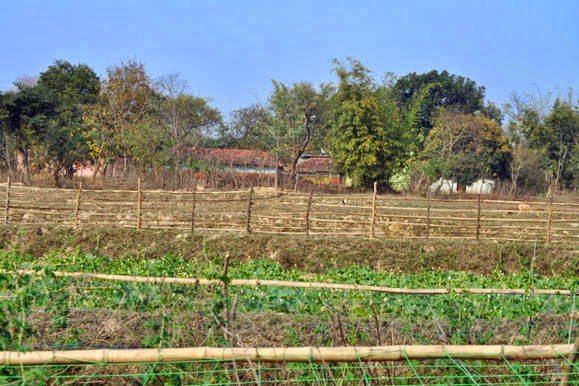
    इसके कुछ किलोमीटर बाद सड़क कुछ दूरी पर थी और हम अल्पविकसित भारत में आ गए थे। पूरी तरह से साफ सुथरी गलियां और संथालों के घर- मिट्टी से बने हुए, क्रमबद्ध, साफ और ताजगी भरे और सुंदर। यह क्या है पांच हजार साल बीत चुके हैं। सुंदर किनारों वाली खिड़किया जिसपर सजावट हुई थी। इस सब में पशुओं के चारे और फूंस का इस्तेमाल किया गया था।

    जैसे ही हम आसनबोली की तरफ चले सभी सड़कें अति व्यस्त मिली। हमने एक मुश्किलभरा सफर किया और अचानक अपने आपने आपको हमने विकास की दौड़ में शामिल व्यवस्था का हिस्सा पाया। कंपनी सरकार यहां मौजूद थी धूल उड़ाती हुई उन लोगों पर जो सड़क के किनारे-किनारे पैदल चल रहे थे या साईकल चला रहे थे।  जैसे घर घने हो रहे थे एक मैटल डिटेक्टर और एक बंदूकधारी पुलिसवाला दिखाई दिया। लोग अपने हाथों में अपने मतदाता पहचान पत्र लिए हुए थे और सड़क के बीच में एक लाइन बनाकर खड़े थे ताकि तलाशी के बाद आगे जा सकें। हम एक वाहन में थे और इसी इसी लहर में शामिल थे लोग अपनी तलाशी दे रहे थे इनमें वे लोग थे जो अपनी जमीन गंवा चुके थे और जो उन्हें वापस नहीं मिलेगी।

    इसी तरह के पैमाने पर सभी भूमि अधिग्रहण किए जाते हैं यह केवल असनबोली की बात नहीं है इसके अलावा इससे लगे 12 गांव और हैं जिनपर कंपनी सरकार की नजर है। चोतरो, तिलामुडा, घोतीदुबा, दिगरसई, कनीकोला, कुदापाल, लोखंडी, बर्धा, बिरगांव, लालमोहनपुर, आजादबस्ती, गोपालपुर, आसनबोनी अपने आपमें कस्बा है इसके रास्ते में पड़ने वाले गांव अधिक जनसंख्यावाले होने के कारण एक टाउन का रूप ले चुके हैं जहां अधिक दुकाने हैं अधिक लोग हैं और जो कोई भूमि रखते हैं वे इसे बेचने के इच्छुक हैं। इनमें से अधिकतर लोग कंपनी सरकार के दलाल बने हुए हैं। यह केवल अदालत में एक छोटी सी कागजी लड़ाई बनकर रह गई है और साल 2004 से ही पुलिस केस चल रहे हैं जिसे दस साल का समय बीत चुका है।

    पहली जनसुनवाई में करीब 350 लोगों ने भाग लिया और जो समान संस्था द्वारा जनवरी में आयोजित की गई थी। विरोधकर्ताओं ने सफलतापूर्वक इस जनसुनवाई को रुकवा दिया था और एडीसी को इस जनसुनवाई को दोबारा आयोजित करना पड़ा। इस जनसुनवाई का आयोजन एक खुले स्थान पर किया गया और विरोधकर्ता जो वास्तव में दूर थे और समर्थक वहां मौजूद थे।

    इस बार पूरी तरह से जनसुनवाई को मैनेज कर लिया गया। यह स्थिति सालों की कोशिश के बाद आई। गांव के बीचो बीच एक पंचायत भवन में जिस तक पहुंचने के लिए एक संकरा रास्ता जाता था और स्टेज पर जाने  के लिए एक छोटा सा रास्ता बनाया गया था जो कंपनी सरकार के लिए आरक्षित रखा गया था। पुलिस बल हथियारों के साथ मुस्तैद था और भवन के अंदर समर्थकों की भीड़ थी।

    गैर संथाली महिलाएं जो चमकदार नई साड़ियों में मौजूद थीं उन्हें जिन्दल की सीएसआर विंग द्वारा साड़ियां पहले ही दी जा चुकी थीं अपने नए कपड़ों का आनंद लेती हुई दिखाई दे रहीं थीं। मानों कंपनी सरकार के समर्थन में एक सत्संग हो रहा हो। भावहीन, पाउडर ब्लू शर्ट पहने अधिकारी मंच पर थे जो स्थानीय समर्थकों का सामना कर रहे थे जो चारों तरफ बिखरे हुए थे चमकदार साड़ियों में और उनके पीछे एक बैरिकेड्स की तरह पीछे मौजूद थे। साड़ी वाली महिलाओं के पीछे और समर्थक दीवार बनाए खड़े थे। और उसके बाद पुलिसवाले खड़े थे। इन सबके पीछे कुछ लोग विरोध में बैनर और लिए नारेबाजी कर रहे थे लेकिन ये लोग मंच के निकट भी नहीं पहुँच सकते थे। इनके लिए पहले से ही सभी रास्ते बंद करके रखे गए थे।

    जैसे ही हम वहां पहुंचे और सामने की तरफ से प्रवेश किया मार्डी दा को स्थानीय कंपनी समर्थकों ने रोक लिया और चिल्लाने लगे ‘‘ ये लोकल नहीं हैं, ये नेता हैं। हट साले नेता’’ तभी मंच से एक स्कूल टीचर बनमाली महतो जो गोटीदुबा से थे विरोध की अगुवाई करते हुए माइक हाथ में लेकर बोलने लगे कि ‘‘हम लोकल हैं आप हमें बोलने दीजिए ’’इस पर कंपनी के समर्थकों ने विरोध किया और चिल्लाने लगे। कंपनी समर्थकांे ने मार्डी दा को और उनके साथियों को मंच से नीचे उतार दिया और उन्हें धकेल कर सड़क पर फेक दिया और उनकी पिटाई की यह सब सभा के सामने हुआ। पिछले दो सालों में मार्डी दा को जितना मैं जानता हूं उन्होंने पहली बार अपना धैर्य खोया। विडंबना देखिए कि कोई दलाल नाराज नहीं हुआ या उत्तेजित नहीं हुआ।

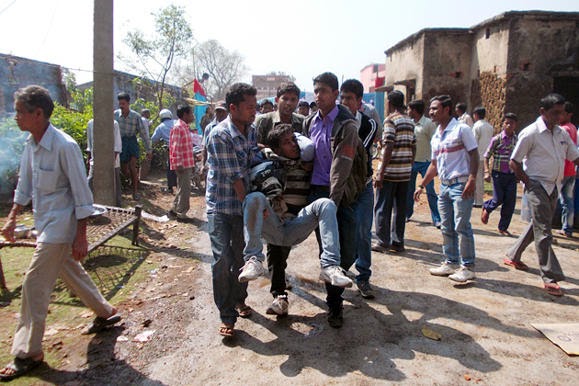
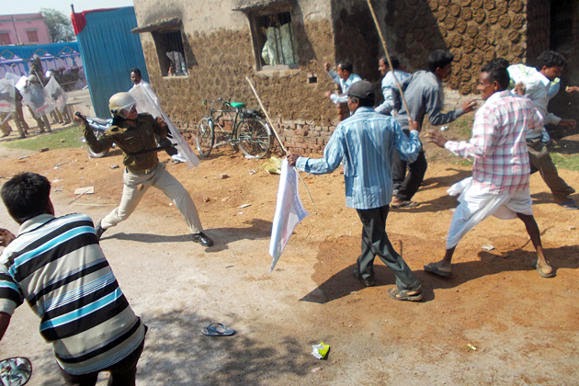
    उसी समय धक्का मुक्की में सभा भवन का पीछे का हिस्सा टूट गया। इसके बाद कंपनी सरकार ने तुरंत प्रदर्शनकारियों पर लाठी चार्ज करवा दिया। इसमें कंपनी के स्थानीय समर्थक और भाड़े के गुंडे भी शामिल थे उन्होंने बांस उखाड़ लिए और पत्थरों से हमला किया। वे प्रदर्शनकारियों को गालियां दे रहे थे और चोट पहुंचा रहे थे इनमें महिलाएं भी उनका साथ दे रही थीं इस घटना में कुछ लोग बुरी तरह घायल हो गए 22 साल के प्रवीन महतो केा इतनी चोट लगी कि उन्हें अस्पताल लेकर जाना पड़ा जिनके सर पर पांच टांके लगाने पड़े। एक बूढ़े आदमी को सर पर चोट के कारण बुरी तरह खून बहा। सभा की समाप्ति के बाद हम वहां से लौट आए और प्रदर्शनकारियों की खबरगीरी में लग गए। यह तय हुआ कि हम गांव और पुलिस से दूर एक मैदान में जमा होंगे। एक बुजुर्ग व्यक्ति इस बात पर जोर दे रहे थे कि हम सबको घर जाकर अपने हथियार और लाठी डंडे लेकर आना चाहिए और पुलिस पर हमला बोल देना चाहिए। लेकिन उनकी इस बात पर किसी ने कोई ध्यान नहीं दिया। कदम कदम पर कहानी में बदलाव आता रहा और जो लोग तितर बितर हो गए थे फिर से एकजुट होने लगे और मैदान में ‘‘जिंदल मुर्दाबाद’’ के नारे गूंज उठे। हर कोई आगे के बारे में सोच रहा था यह बात सभी की समझ में आ चुकी थी कि जनसुनवाई की पटकथा पहले से लिखी जा चुकी थी अब यह साफ हो चुका था कि लड़ाई पहले से भी मुश्किल हो गई है। स्थानीय समाचार चैनल भी प्रदर्शनकारियों से सवाल पूछने पहुंच गया और अधिक से अधिक लोग जमा होते गए।

    इसके बाद हम घायलों को लेकर जादूगोड़ा पुलिस स्टेशन गए और एफआईआर दर्ज कराई। रास्ते में प्रवीन महतो की कई बार पट्टियां बदलनी पड़ी। उन्होंने कहा कि जिसने मेरा सर फोड़ा है मैं उसके कजिन्स को 7वीं से लेकर 10वीं तक ट्यूशन पढ़ाता आ रहा हूं। किसी ने महतो से पूछा कि उसने तुम्हे चोट क्यों पहुचाई है तो इस बात पर सभी हंस पड़े। दुर्भाग्य से हम यूरेनियम कारपोरेशन ऑफ इंडिया लिमिटेड की एम्बुलेंस में थे जो सोवियत संघ की 70 के दशक की वैन प्रतीत हो रही थी।

    जादूगोड़ा की पुलिस आशा के अनुसार ही थी। उनके केस बिना किसी रुकावट के दर्ज कर लिए गए थे जबकि एक केस दर्ज करवाने के लिए सैकड़ों लोगों की भीड़ मौजूद थी। तहरीर लिखी गई और दोबारा लिखी गई, अस्पताल की रिपोर्ट जोड़ी गई और फिर हटा दी गई।

    आसनबोनी में बाद में एक घंटे में जनसुनवाई समाप्त कर दी गई। पुलिस की गाड़ी वापस जादूगोड़ा पुलिस थाने लौट आई। थके मांदे पुलिसवाले प्रदर्शनकारियों के साथ खुले लान में ताजा दम होने लगे। उस शाम को जब हम वापस हो रहे थे तो हम अनेक संथाल महिलाओं के जत्थों के बीच से गुजरे जो संगीत पर नृत्य कर रहीं थीं। गांववाले बाहा पूजा का उत्सव मना रहे थे। हमारे सभी वनवासी समूदायों में यह वसंत उत्सव का अवसर होता है। कोल्हान में जब साल के पेड़ पर पहली कलियां आती हैं तब यह उत्सव मनाया जाता है।
    अगले दिन सुबह मार्डी दा ने गहराई से समाचार पत्र पढ़ा। हेडलाइन चौकाने वाली थी-‘‘ जिन्दल को हरा सिगनल’’,    ‘‘22000 करोड़ स्टील प्रोजेक्ट की बाधा समाप्त’’ और बहुत कुछ। केवल प्रभात खबर ने सही खबर छापने की कोशिश की फिर भी इसके मुख्य पृष्ठ पर हरी झंडी मिलने की घोषणा थी। समाचार एबले ने खबर छापी कि सवाल उठाए गए और उनका जवाब दिया गया। जमशेदपुर टेलीग्राफ ने खबर छापी कि लेबोरेटरी बेस्ड साइंस। जबकि यह सारा मामला चुनावी है और तिलेस्वर साहू की हत्या।

    हम एक लोकतंत्र होने का दावा करते हैं। और हमारे मुख्य सरोकार क्या हैं जबकि चुनाव आने वाला है। देश में 4 मार्च की शाम से ही चुनावी आचार संहिता लगी हुई है। सरकार नई योजनाएं लागू नहीं कर सकती है लेकिन कंपनी सरकार चल रही है। जनसुनवाई 8 मार्च को आयोजित हुई जबकि 7 मार्च को मार्डी दा और उनके साथियों ने लिखित में डिप्टी कलेक्टर को सूचित किया था कि चुनावी आचार संहिता का उल्लंघन किया जा रहा है। वर्तमान विधायक रामदास सोरेन ने भी इस बाबत झारखंड के मुख्य चुनाव अधिकारी को सूचित किया था कि यह जनसुनवाई आचार संहिता का उल्लंघन है। इस संबंध में देश के मुख्य चुनाव आयुक्त वीएस संपथ को नई दिल्ली एक मेल भी किया गया था। इसलिए अब भी यह आशा बनी हुई है कि इस जन सुनवाई को शायद रद्द कर दिया जाए।

    जेएसपीएल के प्रवक्ता का कहना है कि योजना को 40-60 महीनों में कार्यरूप में लाया जाएगा। गणित साफ है हरी झंडी मिलने के बाद भी कंपनी सरकार भूमि अधिग्रहण से दूर है। कंपनी ने    केवल 285 एकड़ भूमि की मांग की है। यह अफवाह भी फैलाई जा रही है कि कंपनी ने कुछ हिस्से पर कब्जा हासिल कर लिया है। यह मामला बड़े स्तर पर भूमि अधिग्रहण का है जो तथ्य सामने आए हैं उनके अनुसार अधिकतर लोगों की भूमि बिक चुकी है। बिना उनके हस्ताक्षर के और तब हर्जाना स्वीकारने के लिए उत्साहित किया जाएगा। कंपनी सरकार को चाहिए 1417 एकड़-1132 एकड़। जैसा कि भूमि शैड्यूल है कंपनी जल्द भूमि को कब्जे में लेने का काम शुरू करेगी। जनसुनवाई के दिन बनमाली महतो ने करीब 1200 लोगों के विरोध का एक विरोधपत्र तैयार किया है जिसमें जिंदल का विरोध करने वाले लोगों के मतदाता पहचान पत्र भी शामिल हैं।

    संविधान की 5वीं और 6ठी अनुसूची में किए गए प्रावधान की विकास के नाम पर अनदेखी पिछले 20 सालों से हो रही है और कंपनी सरकार को फायदा पहुँचाया जा रहा है। वीरप्पा मोइली का पेन आज भी बेहतरीन तरीके से काम कर रहा है। और हर नियमगीरी के लिए सैकड़ों नंदीग्राम-अनेक अचानक मौतें लेकिन इसके बाद भी हर ग्रे योजना को लागू करने की प्रतिबद्धता।

    इस समय चुनाव करीब हैं। और कोई भी राजनीतिक दल इस पृथ्वी के बारे में नहीं सोच रहे हैं जिस पर हम सभी निवास करते हैं। यह हम लोगों का दायित्व है जो इस मामले की गंभीरता को समझते हैं और संभावित बेहतर तरीके के   हिमायती हैं।
    (कुरुष कैंटीनवाला एक फिल्मकार हैं। उनकी हाल ही की फिल्म है कौनकांची मेगा वाट।)

  • Meeting on Working Class Politics (April 19-20, 2014), New Delhi

    Communism is the position as the negation of the negation, and is hence the actual phase necessary for the next stage of historical development in the process of human emancipation and rehabilitation. Communism is the necessary form and the dynamic principle of the immediate future, but communism as such is not the goal of human development, the form of human society. Karl Marx, Economic & Philosophical Manuscripts (1844)

    Communism is for us not a state of affairs which is to be established, an ideal to which reality [will] have to adjust itself. We call communism the real movement which abolishes the present state of things. The conditions of this movement result from the premises now in existence. Karl Marx & Friedrich Engels, The German Ideology (1845)

    The doctrinaire and necessarily fantastic anticipations of the programme of action for a revolution of the future only divert us from the struggle of the present. Karl Marx, To Domela Nieuwenhuis (1881)

    The question of working class strategy has generally been reduced to issues of consciousness raising and particular organisational manoeuvrings to homogenise and hegemonise the self-activities of the working class. In fact, in programmatic terms, it is nothing more than competitive sets of reactive tactics that always claim to respond to the onslaught of capital. So even the question of class as a subjective force becomes irrelevant, leave aside its revolutionary character, rather it is just an arena for competition among various ‘working class’ organisations to present themselves as the most and even sole authentic class representatives negotiating with capital. Ultimately, the most astute negotiator should win. But then successful negotiators must be those who are most comfortable in dealing with capital.

    But history confirms that every time such expert leadership has proclaimed their mastery over the working class, the class itself in class struggle has moved ahead and the question of lag between the ‘spontaneous’ consciousness of the working class and repositories of “revolutionary wisdom” is time and again raised. In fact, both leaders and capital tend to compete and collaborate in competition to harness and ‘productively’ channelise the energy and creativity of the working class, to teach it to behave coherently – for capital this means a process of successful subsumption and for self-proclaimed leaders a successful organising under their leadership.

    However, it is in the solidarian relationship that develops among workers during the course of togetherness in their everyday confrontations with capital and its agencies that we find a self-consolidation of class energy and creativity happening. This is what is called a political recomposition of the working class. It happens through a refusal to submit itself to the mechanics of the technical composition – how capital (re)organises and imposes work to keep on appropriating surplus value, to subsume evermore labour by technological innovations. But it is important to remember, “[i]t would be possible to write quite a history of the inventions, made since 1830, for the sole purpose of supplying capital with weapons against the revolts of the working-class.” (Marx) Hence, it is the assertion of the autonomy of labour (political composition) and capital’s evermore intensified campaign to subsume it that constitute class struggle. It is the working class that acts to which capital reacts.

    When in our January meeting we discussed the introduction of electronics and micro-electronics in the production process, it was mainly to understand how today the terrain of class struggle itself has been transformed. If we do not take these changes into account, any talk of workers’ politics and its revolutionary transformative character will be a useless doctrinaire discussion on class strategy. We recognise that technological change is not a linear process, to which other social variables and components must adjust. Technology itself is contradictory – it is a class struggle. Marx noted a long time back that capital innovates evermore “automatic system”. It is exactly this automatic system that has continued being central to the struggle between capital and labour. Today this system has acquired a global dimension – not constituted by individual “self-acting mules” aided by separated individuals or groups of individual workers but via networked machines and workers toiling in diverse spacetimes.

    The technical recomposition of the working class around new inventions/technologies poses a crisis for existing political forms in the working class movement. These forms either become outmoded or co-opted, or have to transform themselves to contribute in the emergence of a new political composition to reassert the autonomy of labour.

    We met thrice in Sevagram to discuss the evolving character of class conflicts and workers’ self-activisms, how they reflect upon various congealed organisational forms and their claims to class radicalism and politics. Our next meeting is in Delhi, April 19-20 (2014). We propose the following broadly defined agenda to continue our discussion:

    1. Changes that have occurred with the incomparable leap in productive forces associated with electronics. What is a radical transformation today?

    2. Changes in the composition of the working class in these forty years.

    3. Appropriate forms of organisations and modes of activities from local to global levels.

    For details, contact radicalnotes@radicalnotes.com

  • An Account of the January 18-19 (2014) Meeting on Working Class Politics at Sevagram

    In our October (2013) meeting at Sevagram, we sought to comprehend the lag between the evolving nature of capital-labour conflicts and the institutionalised political language that most of us spoke – how latter was becoming a hurdle not just in not allowing us to make any meaningful contribution in workers’ politics, but many times by forcing us to play unknowingly reactionary role by thwarting the full realisation of politico-organisational potential of workers’ spontaneity and self-activism. It was this task of understanding and overcoming the lag that led us to demand from ourselves for our January meeting an attempt to engage in “workers’ inquiry” (the concept that we discussed in October) and deconstruct our politico-organisational programmatic abstractions in terms of reflections upon our engagement in concrete processes of class conflicts in our areas of work.

    There were presentations from Nagpur that dealt with the history of workers’ struggles under a competitive regime of multiple trade unionism in particular industries. They showed how, on the one hand, these trade unions complemented the managerial techniques to produce and reproduce divisions among workers. On the other hand, various segments of workers indulged in ‘opportunistic’ manoeuvrings of the agencies of these unions to confront capital. During the discussions it came out that in recent years more and more workers in these industries are employed through contractors and on casual basis, and are thus generally not part of any union. The comrades from Nagpur stressed on bad unionism that simply instrumentalised workers for political gains and pointed at the lack of political consciousness among workers as a reason for their instrumentalisation. They do not consider workers’ said “opportunism” as a possible self-activity under specific conditions of entrenched unionist competition. However, it was pointed out during the discussion that ‘self-activity’ and ‘self-organisation’ are not to be glorified, rather they must be taken as something that necessarily happen in conflictual relationships between labour and capital.

    A report presented from Dhanbad dealt with changes in industrial relations in collieries – with more and more workers being employed through contractors. The problem of multiple unionism on the basis of political lines does nothing but divide the strength and class consciousness of workers – they give a ready mechanism for the management to divide and rule. But the experience of collieries demonstrates that many a times workers, through their own initiatives and spontaneous coordination, confront managements. These initiatives force unions to come together, especially not to allow the competitors to take advantage. It was pointed out during the discussions that the unionist competition complementing the managerial strategies tend to clog out spaces for workers self-initiatives. It takes the suddenness of spontaneity to flush out blockages to workers’ coordination.

    There was a report on the activities of Revolutionary Bolshevik Circle (RBC) and Union Research Group (URG) in 1970s -1980s that also touched upon independent cooperative experiments like that of Kamani Tubes in Mumbai. A worker-activist, who worked in RBC and later on was very closely associated with URG, presented the report. While the RBC was an attempt to move beyond traditional mass bureaucratic political formation within the working class, the leadership soon realised the gap between its programme and workers themselves – a gap between what they were targeting and what workers were up to. In their efforts to transcend this ‘communication gap’, the circle effectively dissipated itself in eclectic concerns of social importance – thus, reducing the working class to the sociologies of stratification and to mere one of those concerns.

    The URG was a product of this dissipation, but was a unique recognition of the complexity of industrial relations beyond just the street rhetoric and muscle flexing that traditional unionism entailed. It did some very interesting studies on hi-tech industries and sought to develop the self-capacity of workers in organising themselves beyond the pecuniary logic of traditional unionism. It sought to arm the workers’ leadership in a factory with its research so that they negotiate with capital as equals and with an advantage – a knowledge of the opponents’ possible moves – changes in technology and managerial strategies. However, as it came out during the discussions, in the process URG seemed to idealise employees’ unions against traditional unions where ‘outsiders’ held the leadership, and sanctified the institutions of collective bargaining. It was noted that the stress on employees unions went well with the upcoming multi-national industries at the time that were wary of India’s traditional ‘political’ trade unionism and its erratic nature, and preferred either no unions or unions which would have interest in companies’ growth.

    A contingent of University Workers, which mostly consist of students and adhoc teachers from various universities in Delhi, discussed their project of bringing out a newspaper, The University Worker (the draft of its first issue was circulated at the meeting). They discussed the crisis of the traditional left student movement, which conceived universities and education as sites of privileges. The political tasks for this movement were envisaged in a dual manner. On the one hand, the ‘workplace’ struggle was reformist and limited to making education inclusive, so that the underprivileged could share the privileges. Inclusion here implied both – an accommodation of more and more students from the underprivileged communities and a change in the curriculum design that can build an environment to facilitate such accommodation. On the other, the ‘revolutionary’ task was to mobilise martyrs who could sacrifice some of their privileges or utilise them to support the masses struggling somewhere else. Students’ movements too reflected the programmatic divide between the economic and the political – instrumentalising the former to prioritise the latter. Left students’ organisations like other left mass organisations engaged in “economic” struggles to mobilise cadres for “political” struggles which were supposedly happening at different sites or planes. During the Naxalbari phase, when we find a heightening of the discourse of sacrifices among students, it was mainly a symptom of a tremendous existential crisis among them. They were unable and unwilling to face the truth of their proletarianisation, in the wake of a massive increase in educated unemployment in the 1960s-70s. The political was an escape from the economic.

    However, what we see now is ever more realisation that education is another work-site – it is integral to the social factory. It too is driven by the same logic of capitalist productivity and work discipline that is imposed through hierarchies and relationships that constitute the university system. Further, the hierarchisation of disciplines, schools, colleges, universities etc reproduces the same segmentation that characterises the labour market and the division among workers. The recent course restructuring and conflicts over it, especially in Delhi University, remarkably reflect all these processes. This has really changed the level of discourse in university politics – students and their organisations talking about the segmented labour market that the university system perpetuates and about the workerisation of the student life, while teachers reflecting upon intensity, productivity and the devaluation of their work to the level of instructors’ – the fading of their autonomy. There is a tremendous increase in ‘flexible’ employment in education – ad hocs, guest lecturers etc., are generally taken up by research students and new graduates. All this has virtually made the old understanding of solidarity redundant and even reactionary – because it leads to escapism and refuses to think education as a site of open class struggle. What is required is an inquiry-based coordination of concrete questions, and struggles around them, among various segments of workers divided across work-sites, including the sphere of education.

    It was this presentation of university and schooling as sites of class struggle that opened up debates regarding the conceptualisation of class as a process continually posed and composed against and through proletarianisation and conflicts over the mobilisation and subsumption of living labour.

    We also discussed the politics of common man (aam aadmi) as a statist response to the legitimation crisis that the capitalist state has been facing – and how its prime motivation is to organise and coopt the “street rage”, which is an expression of socially widespread precarities that manifests the mass character of intensive proletarianisation happening today. We discussed how in the centre of the recent anti-corruption and anti-rape movements were the anxieties and precarities of various proletarianised segments. We also tried to understand in the present conjuncture the meaning of spectacular gestures in terms of which traditional radicalism judged its successes, when they necessarily tended to blunt the critical edge of the centrality of the working class in the name of overcoming economism and socialising the unrest.

    Faridabad Majdoor Samachar (FMS) presented their note on electronics – how its introduction has made many conceptualisations and organisational forms irrelevant for the contemporary working-class movement. There is a general consensus among managements about loyalty and commitment that permanent workers display – this consensus never dies as it revives every time some or other incident of defiance involving temporary workers occurs. But the unpredictability to which the introduction of electronics has exposed companies and governments by decomposing and intensifying production, along with the services transformation does not leave any scope for them to settle with permanent workforce. An increase in the temporary workforce is not a mark of strength and success for these companies and governments, as generally presented by experts and labour activists, but rather it exposes their fragility. They are eventually exposed to more precarities – mercurial and indifferent youthful workforce, having worked in geographically and industrially diverse environments at the age of 20-25 years. They can buy their labour-power, but not loyalty and commitment. The new spirit of the labour movement is embodied by these workers. It came out during the discussion that institutionalised organisational forms and languages are unable to capture this spirit. They are not only incapable of organising these workers, they are even unable to recognise the simmering unrest until and unless some grave incident happens. Therefore, the unpredictable behaviour of these workers is not only a problem for the human resource managements of companies, but also for the big and small managers of the labour movement.

    The discussion on the organisational question was informed by debates around these reportings. The two notes that were circulated prior to the discussion were read in the light of diverse experiences. The note from a Kolkata comrade was, in fact, a response to the invitation letter that was circulated before the October Sevagram meeting, in which he raised apprehensions on any attempt to write off the utility of trade unions and party-forms for the contemporary workers’ movement. Trade union continues to play a defensive role in class struggle, however its bureaucratisation and conservatism must be challenged from below. While history has seen various forms of workers’ organisations, “no form can either nullify or guarantee self-activities of the working class.” Further, one can definitely question the substitutionist tendency, but that should not become the ground to reject the role of theory, individual and party as a network of communists.

    The second note written by a comrade from Nagpur was a response to the first note. It questioned the radical utility of preconceived organisational forms – trade unions and party – outside the labour and capital conflict. Trade unions because of their permanent legal nature have become institutions that cannot question capitalist legality – seeking to reproduce capital as social power, which is established through the wage system. They become complicit in this reproduction. Therefore, independent workers organisations are necessary. The role of communists is to aid workers in developing and sustaining the class capacity to self-emancipate themselves. But in order to undertake this role, they must be inseparable from the working class and fully grounded in class praxis.

    During the course of discussion it was pointed out that it is not sufficient to present a critique of forms only in their own terms – forms are historically specific, contextual. Workers’ organisational forms relate to specific junctures and purpose in class struggle. The resilience of forms must motivate us to examine how the same forms might have changed their functionality and purpose in accordance to their appropriateness in the structure of new reality. In the case of TUs, their legalisation per se is not a problem – because it was also a demand of the movement to decriminalise them. Instead, the issue is whether they are capable of comprehending the exigencies of the political recomposition of today’s working class, whether they are capable of resisting or have become complicit in its normalisation as technical class composition – in the management of class conflicts.

    It was generally accepted during the discussions that the radical character of class conflicts is already evident in the self-activities of workers in their daily encounter with capital and each other since here they confront the root of the capitalist system – the capitalist imposition of work. This recognition exposes the impotence and irrelevance of preconceived organisational forms and vanguardist manoeuvrings, except in dealing with the after-effects of immediate confrontations – the political displacement of class conflicts in representative articulation of demands, rights, claims etc that necessarily must present the effects in understandable (political) language.

    To keep apace with the time, the need to meet every three months was reiterated and it was decided to have the next meeting in Delhi on April 19-20, 2014.

  • ‘अनिवासी’ सारंडावासी !

    झारखण्ड के सारंडा  जंगल के बीच तकरीबन सौ गांव ऐसे हैं जिनके बारे में औपचारिक रूप से राज्य या केंद्र सरकार को कोई जानकारी नहीं है. जाहिर है कि तब यहां के निवासियों की गिनती भी राज्य के बाशिंदों में नहीं होती. ये न वनग्राम हैं, न राजस्वग्राम. इस ‘प्रोटेक्टेड फोरेस्ट’ में रहने वाले करीब 25 हजार आदिवासी व अन्य वन निवासी बिना किसी ‘पता’ के हैं. पहचान पत्र नहीं होने के कारण उन्हें वोट देने का अधिकार भी नहीं.  पेश है तहलका से साभार जसिन्ता केरकेट्टा का आलेख;

    जुलाई-अगस्त, 2011 में सरकार ने औपचारिक रूप से माना था कि झारखंड का नक्सल प्रभावित क्षेत्र सारंडा माओवादियों के कब्जे से मुक्त करा लिया गया है. उससे पहले पश्चिम सिंहभूम जिले का यह इलाका तकरीबन 11 साल से माओवादियों के नियंत्रण में था. इसके बाद अक्टूबर के महीने से ही यहां विकास कार्यक्रम बनने लगे. लेकिन राष्ट्रीय स्तर पर सारंडा सुर्खियों तब आना शुरू हुआ जब जुलाई, 2012 में जयराम रमेश केंद्रीय ग्रामीण मंत्री बने. उन्होंने मंत्री बनते ही इस इलाके के विकास के लिए योजनाएं बनाने के लिए केंद्र और राज्य स्तर पर नए सिरे से कवायद शुरू की. इसके बाद सारंडा विकास योजना बनी और उसके तहत कुछ काम भी हुए. साल 2013 में गणतंत्र दिवस के अवसर पर जयराम ने सारंडा जंगल के दीघा गांव में विकास की बात कही थी. इसके बाद एकीकृत विकास योजना के अंतर्गत दीघा में कुछ काम शुरू हुए हैं. इस योजना में 56  और गांवों को भी शामिल किया गया है जो वनग्राम या राजस्व ग्राम घोषित हैं.
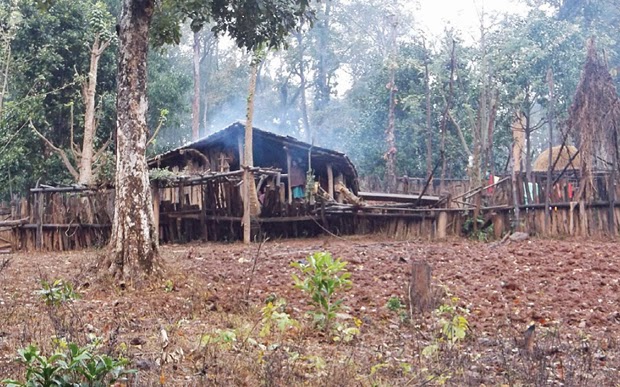
    लेकिन इस सबके बीच आपको यह जानकर हैरानी होगी कि इसी सारंडा में जंगल के बीच तकरीबन सौ गांव ऐसे हैं जिनके बारे में औपचारिक रूप से राज्य या केंद्र सरकार को कोई जानकारी नहीं है. जाहिर है कि तब यहां के निवासियों की गिनती भी राज्य के बाशिंदों में नहीं होती. ये न वनग्राम हैं, न राजस्वग्राम. इस ‘प्रोटेक्टेड फोरेस्ट’ में रहने वाले करीब 25 हजार आदिवासी व अन्य वन निवासी बिना किसी ‘पता’ के हैं. पहचान पत्र नहीं होने के कारण उन्हें वोट देने का अधिकार भी नहीं. इस क्षेत्र में वनविभाग की अनुमति के बिना प्रवेश निषिद्ध है. विभाग से अनुमति मिलने के बाद जब हम घने जंगलों के बीच बसे इन गांवों तक पहुंचे तो हमें पता चला कि पहचान या कागजों पर ‘पता’ न होने से इतर इन लोगों की पीड़ा कहीं ज्यादा है.
    सारंडा के ऐसे ही गुमनाम गांवों में से एक जंबईबुरू गांव की सुकुरमुनी तोरकोद अपनी पीड़ा बयान करते हुए बताती हैं कि उनके बड़े बेटे बिरसा तोरकोद, जो स्टील अथॉरिटी ऑफ इंडिया (सेल) में काम करता था, को पुलिस ने दो साल पहले नक्सली होने के आरोप में पकड़ लिया था. बुरी तरह प्रताड़ित करने के बाद ही उसे छोड़ा गया. यह सिर्फ सुकुरमुनी के बेटे की बात नहीं है. यहां के आम युवकों को पुलिस के इस दुराग्रह से अक्सर जूझना पड़ता है. पुलिस माओवाद उन्मूलन के नाम पर इन गांवों के युवाओं को पकड़ लेती है. सरकारी पहचान न होने की वजह से वे तब ही पुलिस के चंगुल से छूट पाते हैं जब पुलिस ऐसा चाहे. सुकुरमनी जानकारी देती हैं, ‘ सालों पहले 17 किलोमीटर दूर कुंदलीबाग गांव से 250 लोगों का समूह वहां आकर बस गया था. लेकिन सरकारी अधिकारी इस पहचानते नहीं.’
    इस क्षेत्र में एक नदी है जो इन लोगों के लिए जीवनरेखा सरीखी है. लेकिन इस क्षेत्र में सेल सहित खनन करने वाली अन्य कंपनियां खनिजों की धुलाई के बाद निकला गंदा पानी इसमें बहाती हैं. इसकी वजह से नदी का पानी पूरी तरह लाल हो गया है. अपने घर के बर्तन में रखे पीने के पानी को दिखाती हुई सुकुरमुनी बताती हैं कि घर के लोग उसी लाल पानी को कई बार छान कर पीते हैं. इसी गांव के सरगिया तोरकोद जानकारी देते हैं, ‘ नदी की मछलियां और केकड़े तक इस पानी में मर चुके हैं. लेकिन हमारे पास कोई विकल्प नहीं है. सभी गांववाले इसी को इस्तेमाल करते हैं. हम इसकी शिकायत कंपनी के लोगों से कर चुके हैं लेकिन कोई सुनवाई नहीं हुई.’
    सरकार गरीब लोगों को खाने के अनाज पर भारी रियायत देती है, लेकिन यहां के लोगों को यह भी मयस्सर नहीं है. इन लोगों में किसी के पास भी राशन कार्ड नहीं है. इसी गांव के 33 वर्षीय तुरपा सुरीन की उम्र 33 साल है. उनकी दो बेटियां हैं जो चार किलोमीटर दूर कलईता गांव के आंगनबाड़ी केंद्र में पढ़ने जाती हैं. चूंकि सरकार जंबईबुरू को गांव का दर्जा नहीं देती तो वहां कोई स्कूल या आंगनबाड़ी भी नहीं है. तुरपा बताते हैं, ‘ गांव के हालात के बारे में  बीडीओ को जानकारी दी थी पर बीडीओ ने कोई कदम नहीं उठाया.’
    जंबईबुरू से जंगल के और अंदर करीब चार किलोमीटर की दूरी पर बालेहातु गांव है. इस गांव की 69 वर्षीया सोमारी जानकारी देती हैं कि उनके गांव में 26 परिवार रहते हैं. यहां के कुछ बच्चे पढ़ने के लिए थोलकोबाद जाते हैं. बालेहातु के ही खोतो होनहागा बताते हैं कि इस गांव में कोई मुखिया या बीडीओ कभी नहीं आया. इस गांव के आगे चेरवांलोर, कादोडीह, धरनादिरी गांवों की भी ऐसी ही स्थिति है.
    सारंडा में करमपदा एक बड़ा गांव है जिसका तमाम सरकारी दस्तावेजों में नाम आता है लेकिन इसी के पास कई और गांव हैं जो अपना नाम अब तक इनमें दर्ज नहीं करवा पाए हैं. करमपदा के बिमल होनहागा का दावा है कि इस इलाके में करीब चालीस ऐसे गांव हैं जिन्हें अब तक वनग्राम घोषित नहीं किया गया है और जो हर तरह की सुविधा से वंचित है. उनके मुताबिक यहां चेरवांलोर, धरनादिरी, कादोडीह, टोपकोय, कलमकुली, ओकेतबा, कुलातुपु, सरचीकुदर, तोगबो, जोजोबा, बनरेड़ा आदि गांव बसे हैं.
    संरक्षित वन, असंरक्षित लोग
    ह्यूमन राइट्स एंड लॉ नेटवर्क नाम की संस्था से जुड़े चाईबासा हाई कोर्ट के अधिवक्ता अली हैदर इसे विडंबना मानते हैं कि आजादी के 64 साल बाद भी सारंडा के अंदर कई गांवों को वनग्राम का दर्जा नहीं मिला है और वे सरकारी, गैरसरकारी सुविधाओं से पूरी तरह वंचित हैं. वे इस बात को व्यंग्यात्मक लहजे में कहते हैं, ‘ जबकि इसी बीच जंगलों को संरक्षित वन घोषित कर दिया गया है.’  रांची हाई कोर्ट के अधिवक्ता अनूप अग्रवाल कहते हैं, ‘ यहां कोई कम आबादी नहीं है. 25,000 लोग रहते हैं जंगल के बीच. ऐसे में सरकारी जिम्मेदारी बनती है कि वह सर्वे के माध्यम से ऐसे गुमनाम गांवों का पता लगाए और उन्हें वनग्राम व राजस्व ग्राम घोषित करे.’
    सरकार इन गांवों से पूरी तरह अनजान नहीं है लेकिन वह जिस कछुआ गति से आगे बढ़ रही है उससे इन गांवों को सरकारी पहचान मिलने में सालों लग सकते हैं. जगन्नाथपुर अनुमंडल एसडीओ जयकिशोर प्रसाद कहते हैं कि ऐसे गांवों का सर्वे होकर उन्हें बहुत पहले ही वनग्राम घोषित किया जाना चाहिए था. लेकिन अब इसकी जानकारी धीरे-धीरे मिल रही है. फिर भी काम प्रक्रिया के तहत होगा. सर्वे होने, वनग्राम घोषित करने, मतदाता सूची में नाम जाने में अभी लंबा समय लग सकता है. नोवामुंडी प्रखंड भाग-एक की जिला परिषद सदस्य देवकी कुमारी के अनुसार इस समय पांच गांवों को चिह्नित किया गया है. इनमें जंबईबुरू, बालेहातु, धरनादिरी, चेरवांलोर व कादोडीह शामिल हैं. ये पांचों नोवामुंडी प्रखंड भाग-एक के अंतर्गत आते हैं. चाईबासा के डिप्टी कलेक्टर अबुबकर सिद्दीकी ने नोटिफिकेशन पेपर दे दिया है. इसमें इन गांवों को राजस्व ग्राम घोषित करने की बात कही गई है. अब इन गांवों में ग्रामसभा कराना बाकी है. देवकी कुमारी खुद बताती है, ‘अभी लगभग सौ और ऐसे गांव हैं, जिन्हें ढूंढ कर राजस्व ग्राम घोषित करना है.’
    फिलहाल सारंडा के अंदर दीघा गांव को छोड़कर और कहीं विकास की कोई रोशनी नहीं पहुंच रही है. दरअसल सारंडा के जंगल को ‘ प्रोटेक्टेड फोरेस्ट’ घोषित करने के पहले पूरे क्षेत्र का गहन सर्वे जरूरी था. जंगल के अंदर के अचिह्नित गांवों की पहचान करके  उन्हें वनग्राम और राजस्व ग्राम घोषित करना था. ग्रामीणों को वनभूमि का पट्टा देना था. पर सरकार ने बिना सर्वे कराए ही पूरे वनक्षेत्र को संरक्षित कर दिया. ऐसे में सरकार वहां पहुंची नहीं और उस एक चूक ने इन हजारों लोगों की जिंदगी कई और महीनों के लिए पीछे धकेल दी.
  • LA students paint mural commemorating 1968 high school walkouts

    Los Angeles, CA – A mural commemorating the historic 1968 East LA Chicano high school walkouts was dedicated here, at Lincoln High School, March 25. The mural was created by Lincoln High School students who are part of the Behind the Heights Art Team.

    “We are raising awareness in our community through the arts. We made a mural about the walkouts. We did it on a wall next to our school so everyone could see it,” said one of the students who helped do the mural.

    Among those in attendance was veteran Chicano activist Carlos Montes, who helped lead the 1968 walkouts.

  • Senate clears way to vote on restoring Extended Unemployment Compensation (EUC)

    Washington, DC – The Senate cleared the way for a vote on legislation to restore benefits to the long term jobless, March 27. In a 65 to 34 vote, the Senate cleared the procedural hurdles necessary for a debate and vote on a measure to bring back Extended Unemployment Compensation.

    While more Republican opposition to unemployment insurance is expected over the next few days, the bill bringing back jobless benefits will likely pass. Five Republican Senators have signed on to measure, giving it the margin it needs to move forward.

    The decision to go ahead with Extended Unemployment Compensation came on the heels of the passage of a bipartisan deal to spend $1 billion on the fascists who recently took power in the Ukraine.

    The bill extending jobless benefits faces a tough fight in the Republican-dominated House.

    The decision by the Democratic leadership to not include Extended Unemployment Compensation in last December’s budget agreement gave Republicans the power to block measures to aid the long-term unemployed.