Blog

  • The Neoliberal Neo-Nazi Coup in Ukraine. The World is at a Dangerous Crossroads

    Violence and bloodshed continues to rock Ukraine as factions compete in the power vacuum of last month’s coup in Kiev.

    As the country struggles to find its way forward, however, it finds itself in the crosshairs of a US-NATO war agenda that has been unfolding for years.

    This is the GRTV Feature Interview with our special guest, Professor Michel Chossudovsky.

    “We are not dealing with a

  • Ukraine: Identifying the Principal Enemy does not mean the Enemy of my Enemy is my Friend

    The proverb the enemy of my enemy is my friend suggests that two parties can or should work together against a common enemy.

    Although it is often described as an Arabic proverb, there is no evidence of such an origin. The earliest known expression of this concept is found in a Sanskrit treatise on statecraft dating to around the 4th century BC, while the first recorded use of the current

  • Chicago International Women’s Day demands justice for Rasmea Odeh

    Chicago IL – To mark International Women’s Day (IWD) in Chicago, and to honor leading Palestinian women’s rights organizer Rasmea Odeh, 70 activists came together here, March 8, for a panel and dinner titled, “Winning Justice for Palestine & for Rasmea Odeh.”

    The dinner saw one woman speaker after another rising to recognize IWD and the guest of honor, Rasmea Odeh. Odeh is the community activist from Chicago who faces a trial in June on charges that could result in deportation and prison time. She was arrested in October 2013 and charged with violations on a questionnaire for citizenship from 20 years ago. She is the victim of another politically-motivated witch-hunt by federal law enforcement in their campaign to intimidate Palestinian community and solidarity activists.

    Professor Nadine Naber spoke about the history of IWD, and the honored place that Rasmea Odeh holds in the eyes of Palestinian people across the world for her history as a political prisoner and of organizing against Israel’s occupation. Naber offered a powerful analysis of how the U.S. empire claims that women in the Arab and Muslim worlds are oppressed and powerless, and cannot fight for their own rights, which is used to justify U.S. wars and occupations. She went on to say that Odeh and so many other strong women and women’s organizations are self-determined and do not want or need U.S. intervention.

    Sarah Chambers of the Chicago Teachers Union spoke about the teachers at her school, mainly women, who made national news when they refused to give the Illinois Standard Achievement Test to their students in protest of the education program of Mayor Rahm Emanuel, which values non-stop standardized testing over critical thinking and creative learning skills.

    Kait McIntyre talked about the efforts of the Anti-War Committee-Chicago to oppose new wars, as well as that group’s ongoing support for Palestine and for Rasmea Odeh . McIntyre used the opportunity to announce that she is running on an anti-war platform for the board of directors of Boeing Company. Chicago-based Boeing is the second largest arms manufacturer in the world and is bidding for the Pentagon contract to build a new, more deadly combat drone.

    Delores Phillips of the United Electrical workers thanked Odeh for standing up for her rights, in the same way that Phillips, newly elected president of UE Local 1118, and her fellow union activists have been standing up for their rights against the bosses in her workplace. She closed with, “We should support Rasmea in her struggle by showing other women that they are not alone. No woman should go without emotional, physical, educational, mental and financial support!”

    And Lulu Martinez of the Immigrant Youth Justice League described the international headlines made by her and eight other undocumented students – the Dream 9 – who ‘self deported’ by presenting themselves to federal agents in Arizona. She spent 15 days in a federal detention center there, and talked about that experience in prison, which made her respect greatly Odeh’s history as a political prisoner, as well as the tens of thousands of Mexican and other Latino women who have been deported in the past decade.

    The pre-dinner panel began with Palestinian activists Rama Kased, who is based in San Francisco and is a National Coordinating Committee Member of the U.S. Palestinian Community Network, and Tarek Khalil of the Chicago chapter of the American Muslims for Palestine, speaking on the prospects of the peace talks in Palestine.

    Khalil criticized the terms of the negotiations, which he believes violated Palestinians’ rights from the outset. He suggested, like most Palestinians around the world, that the right to return for all Palestinian refugees and their descendants should be the main demand in any negotiations.

    Kased declared that the Palestinian national bourgeoisie, represented by a small sector of the Palestinian Authority, stands to gain economically from a peace treaty, but that the vast majority of Palestinians will not. She also suggested that Palestine-support activists in the U.S. must analyze the issue not only from a human rights standpoint, but mostly from a “liberation framework,” especially since, as she explained, “We are not in the state-building stage of our struggle yet. We are still in the national liberation stage.” In answer to a question from the floor, she supported that the Palestine Liberation Organization needed to be reconstituted, and stated confidently that unity discussions happen regularly in Palestine and beyond, but “this fact just does not make the news here in the states.”

    After the analysis, solidarity activists on the panel held up the gains made by the Boycott, Divest, Sanctions (BDS) movement. Leila Abdelrazaq, a leader in both Students for Justice in Palestine at DePaul University and on the national level, expressed the power of the BDS campaigns to pressure Israel. “BDS forces everyone to see that they can participate in opposing the occupation of Palestine.” She also gave an account of the BDS victories nationally; including the forced resignation of Hollywood star Scarlett Johansson from Oxfam International, the global human rights organization. Johansson chose being a spokesperson for the Israeli company, SodaStream, with its main factory located on occupied Palestinian land in the West Bank, over human rights. BDS activists declared victory and made international news pressuring her to uphold the boycott of SodaStream.

    Bill Chambers of the Palestine Solidarity Group wrapped up the panel by describing local BDS efforts, and asking people to join the BDS coalition in Chicago. Chambers also called for support of a new effort in Illinois to stop a bill in the state legislature. The bill would punish any college or university where faculty members went along with the boycott of Israeli educational institutions. The bill is in reaction to the historic resolution against Israeli apartheid adopted by the American Studies Association in the fall.

  • Obama administration threatens economic sanctions on Venezuela

    Jacksonville, FL – In the latest move by the U.S. to topple the progressive, democratic Venezuelan government, Congresswoman Debbie Wasserman Schultz announced on March 3 that President Barack Obama was considering economic sanctions on Venezuela. Schultz, who represents a district in south Florida and who chairs the Democratic National Committee, made the disturbing announcement on the heels of a proposed Venezuela sanctions bill introduced and sponsored by Florida’s two senators, Marco Rubio and Bill Nelson.

    Other U.S. representatives joined Schultz in calling for economic sanctions on Venezuela, including Miami Republicans Mario Diaz-Balart and Ileana Ros-Lehtinen. Under pressure from the far right of the Republican Party of Florida, which includes sections of the large anti-Castro Cuban exile community in Miami, Governor Rick Scott joined calls for Obama to impose sanctions on the South American country.

    According to Schultz, the proposed sanctions considered by Obama would target many individuals in the Venezuelan government. Senators Rubio and Nelson’s bill would restrict individuals in the Venezuelan government and many leaders of the ruling United Socialist Party of Venezuela (PSUV) from traveling to the U.S., freeze assets in U.S. and U.S.-allied banks and treasuries, and restrict access to credit markets.

    Sanctions are latest move by Washington to topple Venezuela’s progressive government

    These sanctions represent the latest episode in the U.S. government’s long campaign to topple the democratically elected government of Venezuela and stop the Bolivarian revolutionary process. In 2002, U.S. and Venezuelan business elites supported a military coup against then-President Hugo Chavez, who was returned to power within 47 hours by a mass uprising of working people. Less than a year later, rich Venezuelan oligarchs linked to the oil industry halted petroleum production in order to force Chavez from office. The oil bosses locked out the oil workers and threatened violence. Despite support from the U.S., their plot failed due to the continued popularity of the Venezuelan government among the majority of people. Even now, Wikileaks documents show far-reaching connections between the CIA and the right-wing opposition leaders, like Leopoldo Lopez, and instigator of protests and street violence.

    Additionally, the U.S. government spends an incredible amount of money funding the far-right opposition groups protesting President Nicolas Maduro’s government today. Estimates by the Center for Economic and Policy Research found $90 million reaching these groups since 2000. In 2014 alone, the U..S Congress passed a budget containing $5 million in funding for the Venezuelan opposition. While the Obama administration funds the right-wing opposition in Venezuela, they also signed $8.7 billion in cuts to food stamps into law, highlighting how imperialist meddling also hurts the U.S. working class.

    ‘Targeted sanctions’ actually target poor and working people

    Although the politicians calling for sanctions emphasize that they are against individuals, rather than the entire country, the brutal history of U.S. ‘targeted sanctions’ makes clear that the Venezuelan people will suffer from these measures.

    In 2001, then-President George W. Bush signed the deceptively named Zimbabwe Democracy and Economy Recovery Act (ZDERA) to punish the progressive government of Zimbabwe for its land reform program. These sanctions legally targeted only 113 individuals in the government and 70 entities, but the individuals included important government officials and huge state-owned enterprises vital to Zimbabwe’s economy. For instance, the individual restrictions on Minister of Finance Herbert Murerwa’s access to international credit indirectly limited the entire elected government of Zimbabwe, leaving the state unable to pay public workers their full salaries and pensions.

    In order to meet their obligations to workers and African farmers who received land in the redistribution, Zimbabwe was forced to print money. This led to staggering hyperinflation and a shortage of necessary goods like food and AIDS medication. The U.S., UK, and the EU imperialists caused the entire crisis through their ‘targeted sanctions’, and then criticized Zimbabwe’s President Robert Mugabe.

    The U.S. placed more comprehensive sanctions on the Republic of Iraq under President Saddam Hussein throughout the 1990s. They pushed and enforced the punishing sanctions through the United Nations. The U.S. claimed the sanctions were in response to Hussein and the 1990 invasion of Kuwait, but the world knows it was so the U.S. could attempt to dominate the Middle East and seize Iraq’s oil fields.

    Like in Zimbabwe, the real victims of U.S. sanctions on Iraq were ordinary working people. A groundbreaking study by the Food and Agriculture Organization in 1995 found that the UN sanctions on Iraq caused the deaths of more than 567,000 Iraqi children, by restricting access to food, medicine and critical infrastructure. Other studies since then have placed the child death toll alone closer to 1 million.

    Obama’s consideration of sanctions on Venezuela echoes the sick policy justifications of the former Democrat President, Bill Clinton. U.S. Ambassador to the UN, Madeleine Albright, appointed by Clinton, infamously attempted to justify the horrifying deaths of Iraqi children by saying, “We have heard that half a million children have died. I mean, that’s more children than died in Hiroshima. And, you know, is the price worth it? We think the price is worth it.” When it comes to economically devastating the people of Iraq, Zimbabwe or Venezuela, both the Republicans the Democrats see eye-to-eye.

    Sanctions on Venezuela will hurt working families in the U.S.

    It is likely that such sanctions on Venezuela would prevent Maduro’s government from continuing the legacy of Chavez, one in which poor and working families in the U.S. receive free and reduced price oil. Starting in 2005 after Hurricane Katrina, the Venezuelan government partnered with CITGO to provide free heating oil to more than 100,000 families in the U.S. According to CITGO, more than 252 American Indian communities and at least 245 homeless shelters also received this aid. To this day, the program continues, but the sanctions considered by Obama threaten this important economic aid for working families.

    With more and more people opposing the 54-year long U.S. embargo against Cuba, Obama will likely encounter large resistance to sanctions on Venezuela from progressives across the U.S. Nevertheless, the danger of sanctions remains high for both working people in the U.S., who benefit from the solidarity of the Venezuelan government, and the entire people of Venezuela. It will take a nationwide movement of progressives committed to ending U.S. imperialism and supporting the Bolivarian revolutionary process to stop history from repeating itself.
  • Ukraine: “Popular Uprising for Democracy’’ or “Fascist Putsch” by David Mandel

    Democracy and Class Struggle publish this article because it systematically covers a lot of essential background on the Ukraine and poses the right question.


    We do not agree with the appeal to complexity in the article and on much of the pseudo Left to justify political grandstanding – yes class struggle is ultimately reductionist and so is the accurate characterisation of the coup

  • Ukraine: “Popular Uprising for Democracy’’ or “Fascist Putsch” by David Mandel

    Democracy and Class Struggle publish this article because it systematically covers a lot of essential background on the Ukraine.


    We do not agree with the appeal to complexity in the article and on much of the pseudo Left to justify political grandstanding – yes class struggle is ultimately reductionist and so is the accurate characterisation of the coup has a Putsch a characterisation

  • Ukraine: Mariupol workers are more radical than many of the spineless left

    At the meeting were representatives of various social organizations, religious communities and nations – the Azov Greeks, Germans and Russian Jews. Demonstrators adopted a… resolution which demanded: 1. Return of the largest enterprises in the city – they smelters. Ilyich, “Iron & Steel Works” concern “Azovmash” state property. 2. Revitalize sunk into oblivion Azov Shipping Mariupol

  • The Class and Caste Question: Ambedkar and Marx

    [The following presentation was made by Anand Teltumbde at a recent seminar on “Democracy, Socialism and Visions for the 21st Century”, which was held in Hyderabad. – Ed] Click here to download the presentation

  • एक तरफ दीवार, दूसरी तरफ नहर और बीच में रहने को मजबूर लोग

    बिहार की राजधानी पटना में टेश लाल वर्मा नगर झोपड़पट्टी है। यहां पर रहने वाले 274 परिवार के ऊपर विस्थापन की तलवार लटकी हुई है। विस्थापन के विरोध में  गांधी, विनोबा, जयप्रकाश आदि के बताये मार्ग पर  सत्याग्रह  भी किया । जिस तरह ऐतिहासिक गांधी मैदान में महात्मा गांधी  की प्रतिमा के समक्ष मुख्यमंत्री नीतीश कुमार  हालही में विशेष राज्य का दर्जा हासिल करने के लिए सत्याग्रह पर डटे थे वहीँ  पर बेघर लोगों ने  9 माह लगातार सत्याग्रह करते रहे  मगर सत्याग्रह करने वाले मुख्यमंत्री ने  इन बेघरों  की सुध  नहीं  ली. आलोक कुमार की रिपोर्ट;

    यह कैसी मजबूरी है? एक तरफ दीवार है। दूसरी तरफ नहर और बीच में लोग रहने को मजबूर हैं। आखिर किस तरह से और कैसे लोग रहते हैं? कहां चले गए है केन्द्र और राज्य सरकार के अलाप लगाने वाले नेतागण?  ऐसे लोग कहा करते हैं कि हमने यह कर दिया और हमने वह कर दिया। विभिन्न तरह की तकलीफों से दो-दो हाथ होने वाले आने वाले ही लोगों के समक्ष यह यक्ष सवाल खड़ाकर देते हैं कि आपने विस्थापितों को पुनर्वास के लिए कानून बना दिए हैं। आखिर सरकार क्यों नहीं पालन करती है?

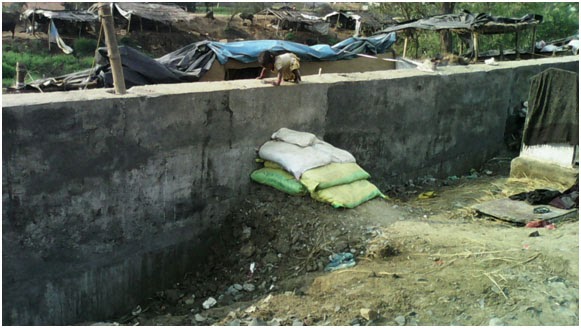
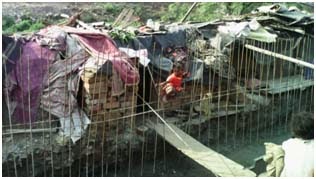
     सर्वविदित है कि भारत की आत्मा गांव में ही बसती है। वहां से तो मजबूरी में निकलकर लोग शहर की ओर आए हैं। यहां पर आने के बाद जिल्लतभरी जिंदगी जीने को बाध्य हो जाते हैं। एक जगह नहीं दर्जनों बार स्थल बदलते हैं। तब जाकर स्थानीपन्न प्राप्त हो जाता है। इसी तरह गांव से चलकर लोग दीघा नहर के तटबंध पर रहने आए थे। तटबंध के बीच में रहते थे। जब पूर्व मध्य रेलवे के द्वारा दीघा से सोनपुर तक गंगा नदी पर रेल सह सड़क सेतु निर्माण करने का शोरगुल हुआ। तब तटबंध के मध्य से हटाकर नहर के किनारे रहने को कह दिया गया। अब स्थिति बदल गयी है। नहर के किनारे भी आफत खड़ी की जा रही है। सावधानी हटी और दुर्घटना घटी के आलोक में पूर्व मध्य रेलवे ने सुरक्षात्मक दीवार खड़ी कर रही है। दीवार को पाइप लगाकर मजबूती प्रदान किया जाएगा। ताकि कोई दीवार पार करके रेलवे स्टेशन और रेलवे पटरी पर न जा जाए। इस समय जोरशोर से कार्य जारी है। इसी तरह लोगों की परेशानी भी जारी है।

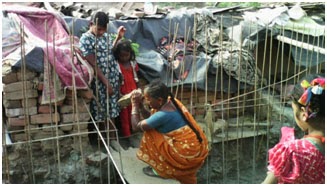
    यहां के लोगों के पास न घर और न द्वार ही बच रहा है। इसके कारण एक लड़की की शादी मंदिर में जाकर रचानी पड़ गयी। इस लड़की के घर के सामने ढलाई करने के लिए छड़ बांध दिया गया। शादी वाले घर में लोगों को आवाजाही करने में दिक्कत होने लगी। तब लड़की की नानी ने छड़ को राह से हटाने का प्रयास करने लगी। ईंट से मार मारकर बंधनयुक्त छड़ को हटा देने में कामयाबी हासिल कर ली। उसी समय एक मनचला ने कहा शुरू कर दिया। चल रे डोली उठाओं कहार पिया मिलन की रीत आई……….। यहां तो डोली उठाने की नहीं छड़ हटाने की नौबत आ गयी थी। नानी के द्वारा छड़ हटाने के बाद ही लड़की और परिजन बाहर निकल पाने में सहजता महसूस करने लगें। 

    विस्थापन के दंश झेलने वालों का नेतृत्व करने वाले सुनील कुमार का कहना है कि फिलवक्त सरकार के समक्ष हम हो रहे विस्थापितों को पुनर्वास करने की दिशा में पहल नहीं की जा रही है। जबकि हमलोग मुख्यमंत्री से लेकर संतरी तक गुहार लगा चुके हैं। कहने का तात्पर्य यह है कि कार्यपालिका, न्यायपालिका, विधायिका और जनतंत्र के चतुर्थ स्तंभ के समक्ष फरियाद किए। सभी जगहों से निराशा ही हाथ लगा। कार्यपालिका और विधायिका के द्वारा आश्वासन के घुट पिलाने के बाद न्यायपालिका में जनहित याचिका दायर की गयी। पटना उच्च न्यायालय के द्वारा सरकार को आदेश दिया गया कि 6 माह के अंदर विस्थापितों को पुनर्वास कर दें। जो सरकार ने पूर्ण नहीं कर सकी।

    आगे कहा कि राजधानी पटना में ही टेश लाल वर्मा नगर झोपड़पट्टी है। यहां पर में रहने वाले 274 परिवार के ऊपर विस्थापन की तलवार लटक गयी है। इसको लेकर गांधी,विनोबा,जयप्रकाश,पी.व्ही.राजगोपाल आदि के बताये मार्ग पर चलकर सत्याग्रह किए। जिस तरह ऐतिहासिक गांधी मैदान में महात्मा गांधी जी के प्रतिमा के समक्ष मुख्यमंत्री नीतीश कुमार जी के द्वारा सत्याग्रह किया गया। मुख्यमंत्री नीतीश कुमार विशेष राज्य का दर्जा हासिल करने के लिए सत्याग्रह पर डटे थे। हमलोगों ने दानापुर प्रखंड के परिसर में 9 माह लगातार सत्याग्रह करते रहे गए। मगर सत्याग्रह करने वाले मुख्यमंत्री ने सुधि ही नहीं लिए।

    साबूत के तौर पर समय-समय पर सरकार के पास प्रेषित पत्रों को दिखाना शुरू कर दिया। इसमें उल्लेख किया गया कि प्रभावित दानापुर अंचल अन्तर्गत ग्राम टेश लाल वर्मा नगर के लोग नवनिर्मित गंगा रेल-सड़क सेतु के निर्माण से 274 परिवार विस्थापन के कगार पर हैं। आरंभ में शेखपुरा स्थित जे.डी.विमेंस कॉलेज के निर्माण होने से 1982 में विस्थापित होकर टेश लाल वर्मा नगर में रहने आये थे। यह दीघा नहर के किनारे है। 1995 में सरकार ने झोपड़पट्टी को मान्यता देकर मतदाता सूची में नाम दर्ज करके मतदाता पहचान पत्र थमा दिये। इसके बाद बुनियादी सुविधाओं को उपलब्ध कराने के उद्देश्य से गरीबी रेखा के नीचे भी शामिल करने कार्ड दे दिया। सभी तरह का प्रमाण उपलब्ध है। आंगनबाड़ी और स्कूल भी खोल दिये। दोनों पर खतरा मडराने लगा है।

    पूर्व मध्य रेलवे ने लोगों को 2002 में नहर के मध्य से झोपड़ी हटवाकर नहर के किनारे करवा दिया। इसके बाद रेल परियोजना का कार्य शुरू किया गया। लोगों ने सवाल उठाया है कि आखिर पूर्व मध्य रेलवे के अधिकारी किस तरह से लोगों को रेलवे की जमीन को अतिक्रमण करने की बात कर रहे हैं। हम लोग 21 साल से दीघा नहर पर रहते आ रहे हैं। पूर्व मध्य रेलवे का कार्य 11 साल से शुरू किया गया है।

    विस्थापन और पुनर्वास की मांग को लेकर पटना उच्च न्यायालय में जनहित याचिका दायर की गयी। 19 अप्रैल, 2010 को पटना उच्च न्यायालय ने प्रस्ताव पारित कर बिहार सरकार को आदेश निर्गत किया कि चार माह के अंदर विस्थापित होने वाले लोगों को पुनर्वास करने की व्यवस्था कर दी जाए। पटना उच्च न्यायालय के इस आदेश की धज्जियां उड़ायी गयी जब पुनर्वास करने के बदले झोपड़ियों को जेसीबी से तोड़वा दिया गया। बिना अग्रिम सूचना के ही हड़बड़ी में खाकी वर्दीधारी उतावले हो गये और तानाशाही रवैया अपना कर झोपड़ी को तहसनहस कर दिया। लोग खुले आकाश में रहने लगे। इस क्रम में एक महिला की सिर भी फट गयी। कई बकरी दबाकर परलोक सिधार गयी। बी.पी.एल.कार्ड से राशन-किरासन गिराकर बर्बाद कर दिये। इतने से मन नहीं भरा तो लोगों के नेतृत्व करने वालों को झूठे मुकदमे में फंसाने की भी धमकी दी जाने लगी।   गीता देवी, रेखा देवी आदि कहने लगे कि सरकार ने मंशा बना ली है। हम किसी तरह से लाठी के बल पर लोगों को नहीं खदेड़ेंगे। पहले रेलवे लाइन के किनारे खड़े झोपड़ी को बुलडोजर से साफ कर दिया। इसके बाद चहारदीवारी खड़ा करने के लिए नींव खोदनी शुरू कर दी गयी। फिर ढलाई करके मोटी दीवार खड़ी कर दी गयी है। हमलोगों को आने जाने में काफी दिक्कत हो रही है। कहीं सीढ़ी तो कहीं बालू का बोरा लगाकर दीवार को पार किया जा रहा हैै। अब आप खुद ही समझे कि मासूम बच्चे किस तरह से पार करेंगे। और तो और एम्स की ओर से दीघा जाने के लिए रोड निर्माण किया जा रहा है। जब रोड निर्माण झोपड़पट्टी तक पहुंच जाता है तो निश्चित ही विस्थापन हो जाएगा। हमलोग सड़क पर आ जाएंगे। तो साबित हो जाएगा कि सरकार किसी को खदेड़ नहीं रही है परन्तु परिस्थितिवष लोग खुद ही चले गए।

     जो भी सरकार के पास विस्थापन का दंश झेलने वालों को सरकार के समक्ष पुनर्वास करने की व्यवस्था है। मगर सरकार नहीं चाहती हैं कि इनको पुनर्वास करें। नौकरशाहों से मिलने पर बताया जाता है कि सरकार पुनर्वास के बाद ही विस्थापित किया जाएगा।

    पूर्व मध्य रेलवे और सरकार के समक्ष पाटलिपुत्र रेलवे स्टेशन को चालू करने की चिन्ता है। इन दोनों का प्रयास है कि किसी तरह से पाटलिपुत्र रेलवे स्टेशन को चालू कर दिया जाए। कई बार प्रयास किया गया मगर लोगों की मांग उठने पर पूर्व मध्य रेलवे और सरकार झुक जाते हैं। नवनिर्मित पाटलिपुत्र रेलवे स्टेशन के उद्घाटन की तारीख तय कर दी गयी है। हालांकि कई बार टलने के बाद 31 अक्तूबर,2013 को पाटलिपुत्र रेलवे जंक्शन का उद्घाटन रेल मंत्री मल्लिकार्जुन खडगे करेंगे। लोकसभा अध्यक्ष मीरा कुमार और मुख्यमंत्री नीतीश कुमार इस मौके पर विशिष्ट अतिथि के रूप में मौजूद रहेंगे। कई तरह के झंझटों के बीच पाटलिपुत्र रेलवे स्टेशन के उद्घाटन का मामला अब तक दो-बार टल चुका है। पाटलिपुत्र रेलवे स्टेशन से चंडीगढ़ और बंगलोर के लिए दो ट्रेनों को भी हरी झंडी दिखायी जाएगी।

    अब देखना है कि इस खेल में जीत किसकी होगी? वह आने वाले कल ही पता चल सकेगा।

  • House to deal with Extended Unemployment Compensation (EUC)

    Washington, DC – In a surprise move, Representative Brad Schneider (D-IL) announced here today, March 11, that he would undertake a rarely used procedure in an attempt to force a House vote on Extended Unemployment Compensation (EUC). According to a press statement, Schneider will file a discharge petition on March 12, which would force a vote on benefits for the long-term jobless if a majority of House members sign it.

    This will be an uphill battle. The House of Representative has 232 Republicans and 199 Democrats. When the Democratic leadership in Congress failed to insist on placing Extended Unemployment Compensation (EUC) in the December 2013 budget accord, they effectively gave Republicans veto power over measures to extend unemployment benefits.

    Republicans, who often blame high unemployment rates on the unemployed, are in general hostile to an extension of jobless benefits. For example, the prominent conservative Rand Paul states that Unemployment Insurance should be limited to 26 weeks.

    A measure to extend benefits for the long-term unemployed needs to pass both the House and Senate to be signed into law.

    More than 2 million workers have been hit by the cutoff of Extended Unemployment Compensation. Many are losing their homes, face repossession of their cars and are unable to make utility payments.

    Many states continue to have extremely high unemployment rates. California has an 8.3% unemployment rate and in Illinois it is 8.6%. Rhode Island has the highest unemployment rate, coming in at 9.1%.