Category: Ireland

  • Ireland: Babies deaths, the left, and Catholic Church power.


     As children of unwed mothers, the dead babies were not baptized
    By John Throne

    When my father would come home drunk all I ever heard from my mother was “You will put us all in the workhouse with your drinking.” The workhouse was the great terror in her life. Its name was then changed to the County Home. It was in Stranorlar. 

    I am very keen to hear what demands Comrades who read this blog, or left Comrades in general are putting forward on the issue and the power of the role of the Catholic Church in Ireland. I see where a Protestant organization/church in Dublin has now also been caught with a mass grave. This makes things both easier and more urgent to clarify and raise demands. 
    Comrades I have to say that over the recent years I have been surprised at the reluctance of people on the left to take on the structure of the Catholic Church in Ireland and point out its role and power. Paddy Devlin was one of the few well-known left politicians to do so for all his faults. He said that the Catholic Church blocked the development of the left at every turn and as a result every radical movement from below had nowhere to go except sectarian republicanism. 
    I was recently in Derry and had to meet a man there that I knew. He was not a socialist. But he knew me and my opinions very well. He said he had to call a few places to collect something and then we would go on to our destination. I said fine and thought no more about it. After a few stops we arrived at the Catholic Church and in he went and delivered the money he had been collecting at the stops he had been dragging me—-an atheist and Marxist—–around to. I was enraged that he had involved me in collecting money for that outfit. I broke off all relations with him after this. 
    I raised this with a Comrade who is an atheist and former leading member and full timer of the old CWI, the socialist organization from which I was expelled. I said how about if I had taken that other man, the devout Catholic, around and collected money for the Orange Order and never told him what I was doing? Would he not be enraged? This Comrade said he would never have thought about it like this. I was and am astounded that he would not. It shows the depth of the indoctrination of the Catholic Church over its members. The difference between the Orange Order and the Catholic Church is mainly one of power.  
    The Catholic Church campaigned from the pulpit for the move to the National Wage agreements in

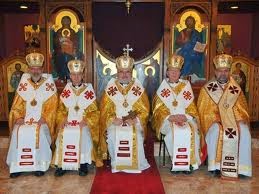
    Onward Christian soldiers

    the early 1970’s. The Catholic Church set up a committee at the time to set the wage for its lowest rank male full time workers that it calls priests. Donal Nevin, a top trade union official was brought on to the committee. This was to pretend that the labor movement was involved. This committee set a wage for these full time church workers which was three times that of the income of a single mother with three children. Am I not also right in thinking that when it looked like the Stalinist WP was going to take over the ITGWU the Catholic church mobilized its brainwashed members in the trade union and labor bureaucracy and merged the ITGWU and the FWUI and kept the “commies” out. We are dealing with an extremely powerful and conscious political organization of capitalism in the Catholic Church. The Protestant churches are also churches of capitalism but the Catholic Church with its 1.1 billion members, its own state and with diplomatic rights in countries it has a presence, is the main one. 

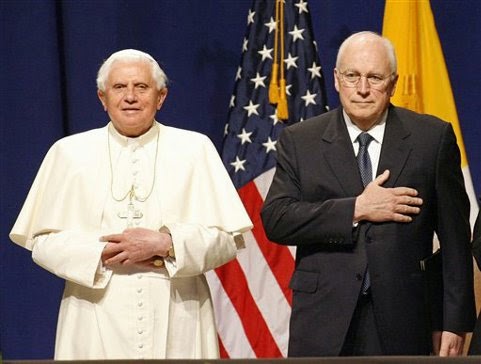
    The US ambassador to the Vatican said that the moral power of the Catholic Church and the

    economic power of the US would bring down Stalinism. He was not far wrong. the Catholic hierarchy held many meetings with top strategists of US imperialism as Stalinism began to crack. Google this and you will be astounded at how much information comes up. The popes of the time made trip after to trip to the Stalinist countries to whip up their supporters and make sure that Stalinism was followed by capitalism and not democratic socialism.

    So back to Ireland. There will be no successful socialist revolution in Ireland that does not take on the Catholic Church just as there will not be on in the US that does not take on institutionalized racism or sexism. Look at the role such outfits played in the Russian revolution and the Spanish Civil war and the dirty wars in Latin America. The Catholic Church will use the sword by means of mobilizing its members. The left must not be intimidated in the present situation. There is a chance now to strike a serious blow at all the churches and their support for capitalism. For this some cutting edge demands must be developed. I am not in Ireland so I cannot be sure. But some I would suggest: 
    No religious organizations to be allowed to control any school, place of education or hospital. 

    All who see themselves as progressive and revolutionary leave any organization that is based on sectarianism. 

    All organizations that discriminate on gender or LGBT basis to be shunned and all who think of themselves as progressive to leave these organizations. If they cannot leave them build opposition groups within them. 

    All who think of themselves as progressive not to allow their children to be named in such organizations and not themselves to marry or be buried in these outfits. 

    Tax all religious organizations. 

    Open up a debate on whether organizations such as the churches and houses of all religious organizations with their criminal records should be banned from owning property. 
    Readers of this blog that know me will know that I was born into a Protestant Orange Order family. My uncle who brought me up was the “Worshipful District Master” they use the fancy titles too like the churches. I broke from that background ended up in the Bogside where I was on the Bogside Citizens Defense Association. I went on to become a revolutionary socialist and remain so and also an uncompromising atheist. Revolutionaries in Ireland must consider have they fully broken from their religious indoctrination whether Protestant or Catholic. 
    If what I hear is right and there is not a united front of direct action to force the issue of the mass graves of children on to the parliaments North and South and to end the control by the religious organizations over so much of society then I am worried.  
    If this is the case then a great opportunity is being missed. And if as some Comrade says FF and FG are taking up this issue then of course they are. But the question is why can they? They can only do so with any impetus if the left does not take it up and takes it up in the way I suggest that is by showing how weak Irish capitalism made a deal with the Catholic church and gave it control over the workhouses, children’s homes, schools and hospitals. It was in a hospital like this that the Indian doctor, Savita Happanavar died after her pleas to terminate her pregnancy due to a miscarriage were refused.  She was told, “This is a Catholic Country.”
    As I pointed out in a previous blog, the Irish capitalist class were too weak to lead the struggle for independence in Ireland. (See Trotsky’s Theory of the Permanent Revolution. The capitalist parties will not take on the Catholic Church and its control over Irish society.  Irish capitalism and the Catholic hierarchy are both responsible, this alliance is responsible for the mass graves just as this alliance is responsible for the Magdalene Laundries, orphanages and women who were imprisoned in them.

    The issue must be taken up in this way because now the mass media is trying to blame the “Irish People.” Anything to get their class and its allies the Catholic and Protestant hierarchies off the hook. 

  • Catholic church in Ireland threw 800 little children in a septic tank.

    Sean O’Torrain

    Just when you think it could not get any worse another crime of the Catholic church is exposed in Ireland. This time it is the bodies of 800 little children in a septic tank. They were thrown there when they died of malnutrition and disease which resulted from them being neglected by the Catholic church which ran the home in which they were held. They were held there and neglected because their mothers were not married, that is their mothers had not gone through the ritual and garbage that the Catholic church says they have to to be able to have sex. You have to really think about this.

    The unelected dictatorship which runs the 1.1 billion Catholic church is all men. Women are banned from the top positions. They are inferior according to the Catholic hierarchy. The Catholic church is the main church of capitalism. It worked with and helped US imperialism to organize the so-called dirty wars in Latin America where tens of thousands including its own left wing the liberation theologists were murdered and slaughtered. It worked with US imperialism to see that when Stalinism fell it was replaced with capitalism and not democratic socialism. US imperialism and the Catholic church are responsible for the wars and mass poverty that has resulted from the collapse of Stalinism.  The last pope was a former member of the Hitler youth. This pope was a collaborator with US imperialism in the dirty wars. This is a monstrous organization.

    Back to Ireland. The Catholic Hierarchy are responsible for this mass killing of these children. But they are not the only culprits. The Irish capitalist class were too weak to lead the struggle for independence in Ireland. (See Trotsky’s Theory of the Permanent Revolution.) The counter revolution that followed the war of independence left capitalism in place but very weak. They needed allies. They looked for and found one in the Catholic hierarchy. The dirty deal was done. The Catholic hierarchy could have the schools (centers of propaganda), the hospitals and a veto over all major legislation, especially social legislation, and could dictate the “morals” of the people. I never heard of James Joyce until I emigrated from Ireland when I was 20 and a young man from Quebec told me about him.

    But to get back on track. The Catholic hierarchy and the Irish capitalist class are both responsible for throwing these little children into this septic tank.  The horror of it is unbelievable. And now some full time organizer of the Catholic church, they call themselves priests to better intimidate people, says the children were only “resting.” I do not believe it is a good idea to support the capitalist state to ban any organization as it can then use this ban to justify banning workers organizations. But if there was ever a case to ban an organization there would be to ban the Catholic church in Ireland.

    But I do not call for this instead I call for all members of that church to leave it and never participate in any activity it is involved with. I cannot see how any decent, any intelligent person can belong to that organization. It is utterly corrupt, utterly anti-democratic and utterly anti-women. I cannot for the life of me see how people who say they are against capitalism and imperialism, how people who say they are Republicans can belong to the Catholic church.

    The Catholic church has a massive structure of wealth and resources. It has tens and tens of thousands of full time organizers, they call them priests, nuns, bishops, cardinals, popes, this is again to intimidate and impress, these people are full time organizers for a dictatorial capitalist organization. So how can people who say they are against the system, get named, get married, get buried by these people, by this organization. It only gives this organization greater authority and control. I see the Republicans in Ireland attending the Catholic church and I am astounded at the reactionary role this plays.

    In the North of Ireland we have the Paisleys and the Protestant organizations. They are just as bad only they did not get their hands on as much undiluted power. But they have been able to justify every wrong they have done by pointing to the role of the Catholic church in the South and internationally. Imagine what Paisley and co will be saying now about the 800 children in the septic tank in Tuam. And the Catholic population, their leaders, such as Gerry Adams and the rest of them will not have a word to say.

    • Putting the Catholic Church in Its Place

       JUNE 02, 2014
      Jimmy Gralton’s Ireland

      by HARRY BROWNE

      Ken Loach and Paul Laverty’s Jimmy’s Hall is as near as makes no difference to being a sequel to their superb 2006 film, The Wind That Shakes the Barley. The earlier film showed how the Irish independence struggle gave way to a brutal counter-revolution that preserved aspects of British colonialism and entrenched a reactionary Irish bourgeoisie to run the new state.

      The great new film picks up ten years later and nearly 200 miles north of the Cork setting of The Wind… in the beautiful, boggy landscape of County Leitrim. The revolution that was crushed in 1922-23 attempts one last, jazzy kick in the arse of the new establishment, as an unapologetic republican-socialist returns from New York after a decade’s exile and re-opens a community hall that accepts no authority except that of the people who built it. And in Ireland in 1932, that means defying the Catholic Church.

      The story of Jim Gralton and his hall is absolutely true, though director Loach and writer Laverty have taken plenty of liberties with it. Gralton, who had US citizenship, was deported back to New York from the country of his birth in 1933, ironically by a government that was supposed to be truer to the republican ideals of the Irish rebellion than the one that ruled the first decade after independence. Gralton was gone and nearly but not quite forgotten, with a few leftists and local-historians clinging through the decades to his ideas and to a story that knits together Marxist internationalism with Irish anti-imperial resistance; a love for Irish music and culture with the irresistible strains of American jazz. I can remember a quarter-century ago marching through the lanes of a Leitrim village with a few dozen of the assorted clingers, at a very lovely and thought-provoking event called the Jim Gralton Summer School.

      Irish actor, playwright and activist Donal O’Kelly became the latest to draw a spark from the Gralton flame when in 2012 he produced a sort of multimedia, audience-participation pageant, directed by Sorcha Fox, called Jimmy Gralton’s Dancehall. (O’Kelly turns up in Loach’s film in a bit part; Fox is wonderful in a more substantial one.) The ‘play’ gets credited by Loach and Laverty, and so it duly turns up with a mention in many of the (mixed) reviews of the film. But I’m going to go out on a limb and guess that none of the international film-critic fraternity actually saw O’Kelly boogy-woogying as JIm Gralton in any of the handful of performances of Jimmy Gralton’s Dancehall that were staged, with the involvement of scores of local people, in remote locations in the west of Ireland.

      I saw it in the old ‘Rainbow Ballroom of Romance’ in Glenfarne, County Leitrim, and wrote about it for the Irish edition of the Sunday Times. (My article is behind Rupert Murdoch’s paywall.) As in Loach’s film, Gralton’s stand-off with his parish priest, hater of both Gralton’s politics and his African-Americanised cultural baggage, was the dramatic centre of the affair; but  the dancing, during and after the ‘play’, was the highlight of the show, great Irish highsteppers mixing with African asylum-seekers, and anyone else who showed up, to try some old and new steps, with the floor heaving beneath us. I wrote at the time:

      “… there’s nothing terribly radical in 2012 about mocking and chiding the 20th-century Catholic Church for its oppressive terror, even if the story of Ireland’s jazz rebellion can always do with more telling. Jimmy Gralton’s Dancehall, happily, does more than mock: it invites everyone to come and dance on the church’s grave. This grave-dance is, you suddenly realise as you’re pulled out on to the dance floor, a party that Ireland has been waiting for, especially now that the hollowness of the Celtic “we all partied” Tiger has been revealed. It’s one thing to condemn the Church for its failings and consign it to history, it’s another thing to celebrate the passing of its power and genuinely let everyone join in.

      O’Kelly and Fox used a range of visual and textual tricks, mostly involving slides projected on the back wall of the ballroom, to connect that celebration to various present-day struggles, including that of asylum-seekers fighting against deportation. (The results of the 2004citizenship referendum, the tenth anniversary of which will be marked next week, mean that the strange spectacle of an Irish-born person being deported as an alien is no longer just a frontman anomalous old footnote tied to Gralton’s name.)

      Loach and Laverty, with their fundamental devotion to realism and verisimilitude, can’t quite play it that way. To be sure, they splendidly capture the joyous defiance of the dancefloor; and cinematographer Robbie Ryan uses Loach’s beloved, dying medium of 35mm film to infuse scenes with a watery Leitrim-light magic. But while playing the story straight, they’ve got a political trick up their sleeves all right: instead of dancing on the Church’s grave, they breathe complex human life into their repressed and repressive clergymen, and remind us that there was (and is) more to reactionary Ireland than the power of the Catholic hierarchy.

      It helps that they’ve got great actors to play the young and old priests of the parish: Andrew Scott and Jim Norton. For British and Irish audiences, the latter actor reveals a sort of in-joke that colours our understanding of the film-makers’ purpose. In an absurdly brilliant TV sitcom of the 1990s, Father Ted, produced in London but with Irish writing and acting talent, Norton played Bishop Len Brennan, an occasional character and a nasty, hypocritical piece of work who turned up to bully and discipline the eponymous Father Ted Crilly. In one of the series’ most memorable episodes, Ted, having lost a bet, was required to “kick Bishop Brennan up the arse”.

      The joke of the episode (okay, one joke of the episode) is that the beleaguered Ted pursues the arse-kicking task methodically and without rancour, to the extent that when it is completed, the speechless bishop literally cannot believe it has happened. That didn’t stop the TV moment from being enjoyed and understood as a new Ireland’s symbolic revenge for centuries of repression and cruelty (including sexual violence, as the episode’s casual repetition of the phrase “up the arse” keeps insisting). There’s even, inevitably, an academic book called Kicking Bishop Brennan Up the Arse.
      So when some of us see actor Jim Norton in clerical garb, part of our reaction is, “Oh yes, we kicked the Church up the arse. In 1998. And in regular repeats since then.” Whether Loach and Laverty intended the connection — and trust me, Jimmy’s Hall  can be enjoyed without prior knowledge of Gralton, O’Kelly or Father Ted — they clearly grasp that the idea of the Church as the sole villain of the piece has been done, and it just doesn’t cut it, not in 1932, not in 2014.

      In Jimmy’s Hall, Norton’s Father Sheridan calls Gralton’s attention to a painting on the wall of his study, John Lavery’s 1922 The Blessing of the Colours: it shows a patriotic Irish soldier kneeling, head bowed and flag in his grip, in front of a bishop: State subordinate to Church. This, says the priest, is as it should be. But as the film develops, it becomes clear that the relationship is not as simple as the old priest might wish, and that the Church is not Gralton’s only, or most dangerous, enemy. Gralton moves repeatedly into open conflict with the powerful when he challenges their class power, as when he and his followers restore an evicted tenant family to a rural estate that Irish ‘freedom’ hasn’t freed from its near-feudal lord. When the local big landowners and petty bourgeoisie confer with the priests about what should be done with Gralton, they address the clergy with a striking lack of respect; and by the end Father Sheridan appears to realise dimly that his culture-war with Gralton has been providing cover for an economic war being waged by local and national bosses and proto-fascists.

      There is nothing trivial or academic about such an analysis today. For decades in Ireland, the liberal-left has been fighting the authority of the Church; even after (incomplete but culturally real) defeat of its power over the last two decades, Irish public life is dominated by retrospective revelations of the horrifying cruelty of the institutions through which bishops, priests and Catholic religious orders ran and ruined the lives of the disenfranchised: just last week we learned of a mass grave for babiesat a home for unmarried mothers in County Galway.  By refusing to paint the Church only in shades of black and blacker, Loach invites us to consider on whose behalf Mother Church crushed the lives, hopes and joys of generations of Ireland’s poor.

      After all, the ruling class here has long since stripped off its ecclesiastical garb. The Taoiseach (prime

      minister), Enda Kenny, is a direct political descendent of the nationalist clerico-fascists so brilliantly captured by Loach, but he conspicuously made his mark early in his term with a stirring retrospective denunciation of the Church, earning him a great rush of liberal kudos. Meanwhile, though, he has ruled with an iron fist on behalf of international bondholders in Ireland’s casino banks, and on behalf of the multinational companies that are happy to make a low-tax home in post-Catholic Ireland.

      Love of Ireland lives in every frame of Jimmy’s Hall, in the scenery, in the chat, in the faces of Loach’s usual mix of professional and undiscovered actors. Barry Ward is magnetic as Gralton, Simone Kirby beautifully blue-eyed and careworn as his comrade and love-interest, Oonagh; and Francis Magee visibly channels Robert Mitchum in a key supporting role. It seems that Loach and Laverty love Ireland enough to know that (some electoral grounds for optimism aside) it still needs a Jim Gralton, or a few, not to fight the Church, but to fight the class that now rules without wrapping itself in Christian piety.

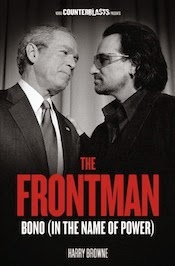
      Harry Browne lectures in Dublin Institute of Technology and is the author of The Frontman: Bono (In the Name of Power). Email:harry.browne@gmail.com, Twitter @harrybrowne

    • More crimes of the Catholic Hierarchy in Ireland.

      Galway historian reveals truth behind 800 orphans in mass grave

      \"A

      A septic tank near a long abandoned workhouse in Galway was found to contain the bodies of up to eight hundred infants and children.
      There is a  growing international scandal around the history of The Home, a grim 1840’s workhouse in Tuam in Galway  built on seven acres that was taken over in 1925 by the Bon Secours sisters, who turned it into a Mother and Baby home for “fallen women.”
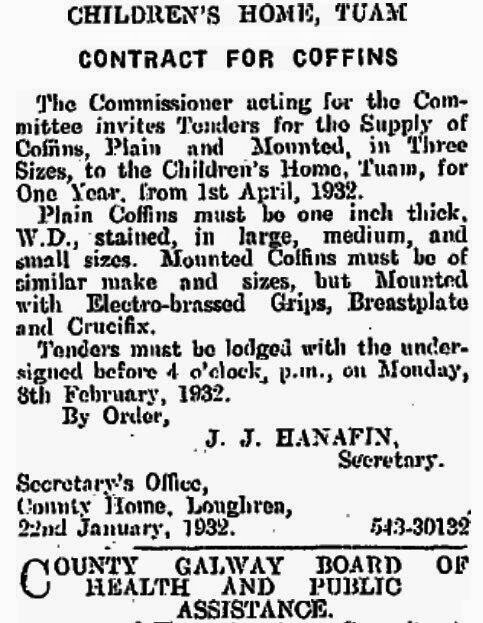
      The long abandoned site made headlines around the world this week when it was revealed that a nearby septic tank contained the bodies of up to eight hundred infants and children, secretly buried without coffins or headstones on unconsecrated ground between 1925 and 1961.
      ****http://www.irishcentral.com/opinion/cahirodoherty/Nuns-join-Irish-bankers-in-avoiding-justice-over-Magdalene-payments.html
      Now a local historian has stepped forward to outline the terrible circumstances around so many lost little lives.
      Catherine Corless, the local historian and genealogist, remembers the Home Babies well. “They were always segregated to the side of regular classrooms,” Corless tells IrishCentral. “By doing this the nuns telegraphed the message that they were different and that we should keep away from them. 
      “They didn’t suggest we be nice to them. In fact if you acted up in class some nuns would threaten to seat you next to the Home Babies. That was the message we got in our young years,” Corless recalls. 
      Now a dedicated historian of the site, as a schoolgirl Corless recalls watching an older friend wrap a tiny stone inside a bright candy wrapper and present it as a gift to one of them.
      “When the child opened it she saw she’d been fooled,” Corless says. “Of course I copied her later and I tried to play the joke on another little Home girl. I thought it was funny at the time.”
      But later – years later – Corless realized that the children she taunted had nobody. “Years after I asked myself what did I do to that poor little girl that never saw a sweet? That has stuck with me all my life. A part of me wants to make up to them.”
      Surrounded by an eight-foot high wall, Tuam, County Galway locals say that they saw little to nothing of the daily life of The Home or of the pregnant young mothers who arrived and left it without a word over the decades. 
      In the few surviving black and white photographs taken at the site no child is smiling. Instead they simply frown at the camera, their blank stares suggesting the terrible conditions.
      A local health board inspection report from April 1944 recorded 271 children and 61 single mothers in residence, a total of 333 in a building that had a capacity for 243.
      The report described the children as “emaciated,” “pot-bellied,” “fragile” with “flesh hanging loosely on limbs.” The report noted that 31 children in the “sun room and balcony” were “poor, emaciated and not thriving.” The effects of long term neglect and malnutrition were observed repeatedly. 
      Children died at The Home at the rate of one a fortnight for almost 40 years, one report claims. Another appears to claim that 300 children died between 1943 and 1946, which would mean two deaths a week in the isolated institution.
      In The Home’s 36 years of operation between 1926 and 1961 some locals told the press this week of unforgettable interactions with its emaciated children, who because of their “sinful” origins were considered socially radioactive and treated as such.
      One local said: “I remember some of them in class in the Mercy Convent in Tuam – they were treated marginally better than the traveler children. They were known locally as the “Home Babies.” For the most part the children were usually gone by school age – either adopted or dead.”
      Thanks to Corless’ efforts we now know the names and fates of up to 796 forgotten infants and children who died there, thanks to her discovery of their death records when researching The Home’s history. 
      “First I contacted the Bon Secours sisters at their headquarters in Cork and they replied they no longer had files or information about The Home because they had left Tuam in 1961 and had handed all their records over to the Western Health Board.” 
      Undaunted, Corless turned to The Western Health Board, who told her there was no general information on the daily running of the place.
      “Eventually I had the idea to contact the registry office in Galway. I remembered a law was enacted in 1932 to register every death in the country. My contact said give me a few weeks and I’ll let you know.”
      “A week later she got back to me and said do you really want all of these deaths? I said I do. She told me I would be charged for each record. Then she asked me did I realize the enormity of the numbers of deaths there?”
      The registrar came back with a list of 796 children. “I could not believe it. I was dumbfounded and deeply upset,” says Corless. “There and then I said this isn’t right. There’s nothing on the ground there to mark the grave, there’s nothing to say it’s a massive children’s graveyard. It’s laid abandoned like that since it was closed in 1961.”
      ****http://www.irishcentral.com/news/Memorial-campaign-underway-for-forgotten-grave-of-800-babies-in-Galway.html
      The certificates Corless received record each child’s age, name, date – and in some cases – cause of death. “I have the full list and it’s going up on a plaque for the site, which we’re fundraising for at the moment. We want it to be bronze so that it weathers better. We want to do it in honor of the children who were left there forgotten for all those years. It’s a scandal.”
      Corless believes that nothing was said or done to expose the truth because people believed illegitimate children didn’t matter. “That’s what really hurts and moved me to do something,” she explains.
      During its years of operation the children of The Home were referred to as “inmates” in the press. It was believed by the clergy that the harsh conditions there were in themselves a form of corrective penance. The state, the church and their families all failed these women, Corless contends. 
      But even now the unexpected difficulty that the local committee Corless has joined to fundraise for a plaque to remember the dead children suggests that not everyone wants to confront the truth about the building’s tragic past.
      “I do blame the Catholic Church,” says Corless. “I blame the families as well but people were afraid of the parish priest. I think they were brainwashed.  I suppose the lesson is not to be hiding things. To face up to reality. 
      “My fear is that if things aren’t faced now it’s very easy to slide back into this kind of cover-up again. I want the truth out there. If you give people too much power it’s dangerous.”
      Living and dying in a culture of shame and silence for decades, the Home Babies’ very existence was considered an affront to Ireland and God. 
      It was a different time, some defenders argued this week, omitting to mention that the stigmatizing silence that surrounded The Home was fostered by clerics. Indeed the religious orders were so successful at silencing their critics that for decades even to speak of The Home was to risk contagion.
      And now that terrifying era of shame and silence is finally lifting, we are left to ask what all their lonesome suffering was in aid of, and what did it actually achieve?
      To donate to the memorial for the mothers and babies of The Home, contact Catherine Corless at catherinecorless@hotmail.com.
      There is a growing international scandal around the history of The Home, a grim 1840’s workhouse in Tuam in Galway built on seven acres that was taken over in 1925 by the Bon Secours sisters, who turned it into a Mother and Baby home for “fallen women.”

      The long abandoned site made headlines around the world this week when it was revealed that a nearby septic tank contained the bodies of up to eight hundred infants and children, secretly buried without coffins or headstones on unconsecrated ground between 1925 and 1961. Now a local historian has stepped forward to outline the terrible circumstances around so many lost little lives.

      Catherine Corless, the local historian and genealogist, remembers the Home Babies well. “They were always segregated to the side of regular classrooms,” Corless tells IrishCentral. “By doing this the nuns telegraphed the message that they were different and that we should keep away from them.

      “They didn’t suggest we be nice to them. In fact if you acted up in class some nuns would threaten to seat you next to the Home Babies. That was the message we got in our young years,” Corless recalls.
      Now a dedicated historian of the site, as a schoolgirl Corless recalls watching an older friend wrap a tiny stone inside a bright candy wrapper and present it as a gift to one of them.

      “When the child opened it she saw she’d been fooled,” Corless says. “Of course I copied her later and I tried to play the joke on another little Home girl. I thought it was funny at the time.”

      But later – years later – Corless realized that the children she taunted had nobody. “Years after I asked myself what did I do to that poor little girl that never saw a sweet? That has stuck with me all my life. A part of me wants to make up to them.”

      Surrounded by an eight-foot high wall, Tuam, County Galway locals say that they saw little to nothing of the daily life of The Home or of the pregnant young mothers who arrived and left it without a word over the decades.

      In the few surviving black and white photographs taken at the site no child is smiling. Instead they simply frown at the camera, their blank stares suggesting the terrible conditions. A local health board inspection report from April 1944 recorded 271 children and 61 single mothers in residence, a total of 333 in a building that had a capacity for 243.

      The report described the children as “emaciated,” “pot-bellied,” “fragile” with “flesh hanging loosely on limbs.” The report noted that 31 children in the “sun room and balcony” were “poor, emaciated and not thriving.” The effects of long term neglect and malnutrition were observed repeatedly.

      Children died at The Home at the rate of one a fortnight for almost 40 years, one report claims. Another appears to claim that 300 children died between 1943 and 1946, which would mean two deaths a week in the isolated institution.

      In The Home’s 36 years of operation between 1926 and 1961 some locals told the press this week of unforgettable interactions with its emaciated children, who because of their “sinful” origins were considered socially radioactive and treated as such.

      One local said: “I remember some of them in class in the Mercy Convent in Tuam – they were treated marginally better than the traveler children. They were known locally as the “Home Babies.” For the most part the children were usually gone by school age – either adopted or dead.”

      Because of Corless’ efforts we now know the names and fates of up to 796 forgotten infants and children who died there, thanks to her discovery of their death records when researching The Home’s history.

      “First I contacted the Bon Secours sisters at their headquarters in Cork and they replied they no longer had files or information about The Home because they had left Tuam in 1961 and had handed all their records over to the Western Health Board.”

      Undaunted, Corless turned to The Western Health Board, who told her there was no general information on the daily running of the place.

      “Eventually I had the idea to contact the registry office in Galway. I remembered a law was enacted in 1932 to register every death in the country. My contact said give me a few weeks and I’ll let you know.”

      “A week later she got back to me and said do you really want all of these deaths? I said I do. She told me I would be charged for each record. Then she asked me did I realize the enormity of the numbers of deaths there?”

      The registrar came back with a list of 796 children. “I could not believe it. I was dumbfounded and deeply upset,” says Corless. “There and then I said this isn’t right. There’s nothing on the ground there to mark the grave, there’s nothing to say it’s a massive children’s graveyard. It’s laid abandoned like that since it was closed in 1961.”

      The certificates Corless received record each child’s age, name, date – and in some cases – cause of death. “I have the full list and it’s going up on a plaque for the site, which we’re fundraising for at the moment. We want it to be bronze so that it weathers better. We want to do it in honor of the children who were left there forgotten for all those years. It’s a scandal.”

      Corless believes that nothing was said or done to expose the truth because people believed illegitimate children didn’t matter. “That’s what really hurts and moved me to do something,” she explains.

      During its years of operation the children of The Home were referred to as “inmates” in the press. It was believed by the clergy that the harsh conditions there were in themselves a form of corrective penance. The state, the church and their families all failed these women, Corless contends.

      But even now the unexpected difficulty that the local committee Corless has joined to fundraise for a plaque to remember the dead children suggests that not everyone wants to confront the truth about the building’s tragic past.

      “I do blame the Catholic Church,” says Corless. “I blame the families as well but people were afraid of the parish priest. I think they were brainwashed.  I suppose the lesson is not to be hiding things. To face up to reality.

      “My fear is that if things aren’t faced now it’s very easy to slide back into this kind of cover-up again.

      I want the truth out there. If you give people too much power it’s dangerous.”
      Living and dying in a culture of shame and silence for decades, the Home Babies’ very existence was considered an affront to Ireland and God.

      It was a different time, some defenders argued this week, omitting to mention that the stigmatizing silence that surrounded The Home was fostered by clerics. Indeed the religious orders were so successful at silencing their critics that for decades even to speak of The Home was to risk contagion.

      And now that terrifying era of shame and silence is finally lifting, we are left to ask what all their lonesome suffering was in aid of, and what did it actually achieve?

      To donate to the memorial for the mothers and babies of The Home, contact Catherine Corless at catherinecorless@hotmail.com.